Your Child’s Dental Questions, Answered
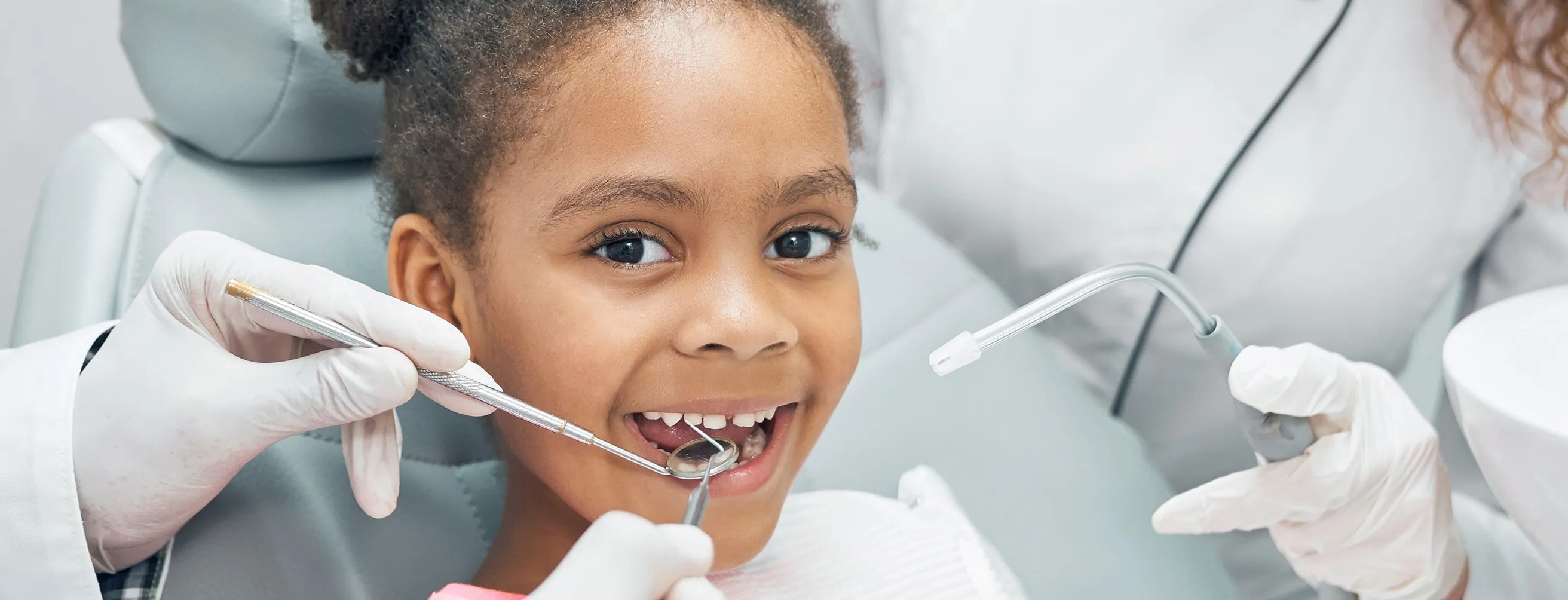
Parents ask us the same handful of questions again and again, from what counts as a dental emergency to whether a mouth guard is worth the bother. Here we’ve gathered the questions our team hears most, grouped by age and stage to help you find what you need quickly. If something about your child’s mouth isn’t answered below, we’re always glad to talk it through with you at either of our Dubai clinics.
General Questions
+What is a paediatric dentist, and how is that different from a general dentist?
A paediatric dentist completes two to three years of extra training beyond dental school, focused entirely on children’s teeth, jaws and behaviour from infancy through the teenage years. At JuniorDental, that training goes further still: our founder, Dr. Rafif Tayara, is trained in paediatric dentistry, orthodontics and Sleep Dental Medicine, so one visit takes in a child’s whole mouth and airway, not the teeth alone.
A toddler, a seven-year-old getting their first adult teeth, and a teenager are all at different stages, and each needs a different approach in the chair. A paediatric dentist trains specifically to guide a child through every one of those stages and to help them feel safe while doing it.
+Why do baby teeth matter, if they’re going to fall out anyway?
Baby teeth hold space for the permanent teeth growing underneath them and guide those adult teeth into the right position as they erupt. They also let a child chew properly, support the shape of the jaw and facial muscles, and help with clear speech. A cavity in a baby tooth is worth treating for these reasons, not something to wait out.
The front four teeth on each arch usually stay in place until around age six or seven, while the back teeth, the canines and molars, generally aren’t replaced until somewhere between ten and thirteen. A baby tooth lost well ahead of that natural schedule may let neighbouring teeth drift into the gap, which is one reason we like to treat decay early rather than monitor it.
+When do my child’s teeth come in, and how many will they eventually have?
Tooth development begins before birth. Around six months of age, the lower front teeth are usually the first to break through the gum, followed closely by the upper front teeth. Most children have all 20 baby teeth by roughly age three, though the pace and order vary from child to child.
Permanent teeth start arriving around age six, beginning with the first molars and the lower front teeth, and the process continues until roughly age 21 with the wisdom teeth. Most adults end up with 28 permanent teeth, or up to 32 once the wisdom teeth, the third molars, come through.
+What should I do in a dental emergency?
The right first step depends on what’s happened. A few of the most common situations:
- Toothache: Clean around the affected tooth and rinse the mouth with warm water, or use floss to clear any trapped food. If the pain doesn’t ease, contact us. Don’t place aspirin or heat directly against the gum or tooth, and if the face is swollen, apply a cold compress and call us straight away.
- A cut or bitten lip, tongue or cheek: Apply ice to control swelling. If there’s bleeding, apply firm, gentle pressure with clean gauze or a cloth. If it doesn’t stop with pressure, go to a hospital emergency room.
- A knocked-out permanent tooth: Find the tooth if possible and hold it by the crown, never the root. Rinse it with water only, and don’t scrub it or clean it with soap. If the tooth looks intact, try gently reinserting it into the socket and have your child bite down on gauze to hold it in place. If reinsertion isn’t possible, carry the tooth in a cup of milk or your child’s saliva (or, for an older child, tucked safely inside the cheek) and get to a dentist immediately. Time matters more than almost anything else here.
- A knocked-out baby tooth: Contact us during clinic hours. A knocked-out baby tooth usually isn’t an emergency, and in most cases treatment isn’t necessary.
- A chipped or fractured permanent tooth: Contact us right away. Rinse the mouth with water, apply a cold compress for swelling, and bring along any broken fragments you find.
- A chipped or fractured baby tooth: Contact us so we take a look.
- A serious blow to the head, or a possible broken jaw: Go straight to the nearest hospital emergency room. For a suspected jaw fracture, try to keep the jaw as still as possible on the way.
+Are dental X-rays safe for my child?
Yes. At JuniorDental, we use low-radiation digital X-rays that expose your child to around 80% less radiation than older film-based systems, along with lead shielding and equipment that restricts the beam to only the area we need to see.
X-rays pick up far more than cavities. We may use them to track how erupting teeth are positioned, check for bone-related issues, assess an injury, or plan orthodontic treatment, and they catch problems that a visual exam alone would miss. The American Academy of Pediatric Dentistry recommends X-rays and exams every six months for children at higher risk of decay; most children need them roughly once a year, with a fuller set of images every few years to build a complete picture. An X-ray that catches a problem early usually means simpler, more comfortable treatment than waiting until it becomes visible or painful.
+How do I choose the right toothpaste for my child?
Look for a fluoride toothpaste that carries a recognised dental-association seal on the box, which means it’s been tested for safety in children. Harsh abrasives in some adult toothpastes wear down young enamel more quickly, so a toothpaste made for children is worth seeking out.
Children should spit out toothpaste after brushing rather than swallowing it, since too much ingested fluoride may lead to a condition called fluorosis. If your child is too young to reliably spit, use only a smear of fluoride toothpaste, choose a fluoride-free option, or brush with water alone until they’re ready, and use no more than a pea-sized amount once they are old enough for a fluoride toothpaste.
+Why is my child grinding their teeth at night?
Nocturnal grinding, or bruxism, is common in young children, and many parents notice it first as a grinding noise during sleep or as unusual wear on the teeth. Researchers have suggested a few possible contributing factors: stress from changes at home or school, pressure changes in the inner ear during sleep, and, in some children, breathing patterns that make grinding more likely. No single explanation fits every child, and in many cases grinding resolves without any treatment at all.
If grinding is frequent or wearing down the teeth noticeably, it’s worth having us take a look. What we recommend next might include monitoring, a night guard, or, for some children, myofunctional therapy aimed at supporting healthier tongue and airway positioning during sleep.
+Is thumb sucking something I should worry about?
Thumb, finger and pacifier sucking are normal reflexes in babies and young children. They’re soothing, which is exactly why so many children reach for them at bedtime or during stressful moments.
Thumb sucking that continues after the permanent front teeth are ready to come in may affect how the mouth grows and how the teeth line up, and how intensely a child sucks matters more than the habit itself. A child who rests a thumb passively in their mouth is far less likely to see any effect than one who sucks vigorously. Most children stop between the ages of two and four, commonly helped along by starting school and noticing what their friends do.
A few things that tend to help:
- Praise your child when they aren’t sucking, rather than scolding them when they are.
- Look for what’s behind the habit. Children who suck for comfort are usually responding to something else, like anxiety, so addressing the underlying worry tends to work better than addressing the thumb itself.
- Offer comfort yourself during hard moments, such as separation from a parent, so your child needs the habit less.
- Keep little hands occupied. Small balls or fidget toys placed around the bedroom, dining table and car may help during the day.
- If gentle reminders aren’t working, a bandage on the thumb or a sock over the hand at bedtime may help a child remember the habit gently, without shame attached.
If thumb sucking is still going strong past age five, we’re glad to talk through whether a mouth appliance might help, and happy to advise sooner if you’re concerned.
+What is pulp therapy?
The pulp is the soft inner core of a tooth, containing the nerves, blood vessels and connective tissue that keep it alive. Pulp therapy, sometimes called a children’s root canal, works to save the tooth itself rather than remove it. Cavities and injury are the two most common reasons a child needs it.
There are two main forms. A pulpotomy removes only the diseased pulp in the crown of the tooth, calms and protects what remains, then finishes with a restoration, usually a stainless steel crown. A pulpectomy becomes necessary when the pulp is affected all the way down into the root canals. Here, we remove the diseased tissue from the whole tooth, clean and fill the canals (with a material that resorbs naturally in baby teeth), and place a final restoration.
+When is the right time for orthodontic treatment?
Signs of a developing bite problem may show up as early as age two or three, and catching them early sometimes means less treatment is needed later. We think about orthodontic development in three stages:
- Early treatment (roughly ages 2–6): the focus here is on narrow dental arches, primary teeth lost too soon, and habits like thumb sucking that may affect how the mouth grows. Treatment started at this stage may reduce, and in some cases remove, the need for more extensive orthodontic work later, though every child’s growth is different.
- Mixed dentition (roughly ages 6–12): as the permanent front teeth and first molars come in, we’re watching for jaw relationship problems and misalignment. Jaws are still growing at this stage and respond well to orthodontic and orthopaedic guidance, which is why it tends to be a good window for treatment such as palatal expansion or Invisalign First.
- Adolescent dentition: by this stage, most permanent teeth are in place and treatment focuses on refining the final bite.
Early Infant Oral Care
+Should I think about oral health before my baby is even born?
Yes. The American Academy of Pediatric Dentistry recommends that pregnant women receive dental care and guidance throughout pregnancy, and research has linked gum disease during pregnancy to a higher risk of preterm birth and low birth weight. At JuniorDental, we offer prenatal consultations for expecting mothers for exactly this reason.
A mother’s oral health also matters for her baby directly, since the bacteria that cause cavities may pass from parent to child. A few things that help reduce that risk:
- Keep up with regular dental visits and daily brushing and flossing.
- Cut back on sugary and starchy foods and drinks.
- Use a fluoride toothpaste with a recognised dental-association seal.
- Avoid sharing utensils, cups or food with your baby once teeth begin to appear.
+What happens at my child’s first dental visit?
The American Academy of Pediatrics, the American Dental Association and the American Academy of Pediatric Dentistry all recommend a first dental visit by your child’s first birthday, sometimes called establishing a “dental home.” Children who have one are more likely to get the preventive, routine care that keeps small issues from becoming bigger ones, and it gives you somewhere other than an emergency room to turn to if something comes up.
A calm first visit usually starts at home, before you even arrive. If your child is old enough to understand, let them know about the visit in simple, low-key terms, and try to avoid words like needle, pull, drill or hurt, which may plant worry that isn’t there yet. Our team is trained to explain everything in language that’s honest but never frightening.
+When will my baby start teething?
The process of teething, when the first baby teeth push through the gums, varies quite a bit from one baby to the next. Some come early, some come late, and either is usually normal. In general, the lower front teeth are the first to appear, usually somewhere between six and eight months of age. For the fuller picture of what comes next, see the tooth eruption answer above.
+What is baby bottle tooth decay?
Baby bottle tooth decay, also called early childhood caries, happens when a baby’s teeth are exposed frequently and for long stretches to liquids containing sugar, including milk, formula and fruit juice. A baby who goes to bed with a bottle of anything other than water ends up with sugary liquid pooling around the teeth overnight, which gives plaque bacteria hours to produce the acid that damages enamel.
If a bedtime bottle is part of your routine, water is the safest choice. If your child won’t settle without their usual bottle, try diluting it with water gradually over two to three weeks until it’s water alone. After each feeding, wipe your baby’s gums and teeth with a damp cloth or gauze pad. Sit with your baby’s head resting in your lap, or lay them on a flat surface with good light, so every area is easy to see and reach.
Prevention
+How should I be brushing and flossing my child’s teeth?
A few basics that make the biggest difference:
Brushing
- From birth, clean your baby’s gums with a soft, damp cloth.
- Once the first tooth appears, switch to a soft-bristled toothbrush.
- Under age two, use only a small smear of fluoride toothpaste; from two to five, a pea-sized amount.
- Choose a fluoride toothpaste with a recognised dental-association seal, and watch that your child isn’t swallowing it.
- Keep brushing your child’s teeth yourself until they’re old enough to do a thorough job alone.
Flossing
- Daily flossing clears plaque from between teeth and under the gumline, areas a toothbrush misses entirely.
- Start flossing as soon as any two teeth touch each other.
- Floss daily until your child manages it independently, without help.
+Does diet affect my child’s teeth?
It does. Teeth, like the rest of the body, depend on a well-balanced diet drawn from all the major food groups. Most of what children snack on carries some risk of cavities, and two things matter more than the snack itself: how frequently a child snacks, and how long the food lingers in the mouth. Hard sweets and breath mints, for example, sit in the mouth a long time, which means a longer acid attack on the enamel.
When your child needs a snack, vegetables, low-fat yoghurt and low-fat cheese are gentler on teeth than most packaged options, and worth reaching for whenever possible.
+How do I help prevent cavities?
Good oral hygiene clears away the bacteria and leftover food that combine to cause cavities. For babies, a wet gauze or clean washcloth wiped over the gums and teeth does the job; for older children, brushing at least twice a day, alongside keeping an eye on sugary snacks, makes the biggest difference. A bedtime bottle containing anything other than water is best avoided too.
The American Academy of Pediatric Dentistry recommends a check-up every six months starting from a child’s first birthday, which lets us catch and treat decay while it’s still small. At JuniorDental, we also use remineralisation treatment, a calcium phosphate-based, non-invasive option that may repair early to moderate decay before it needs a filling at all. Some pediatric dentists also recommend sealants or fluoride treatment as part of a prevention plan; see the next two answers for more detail on each.
+What are dental sealants, and could they help my child?
A sealant is a thin, protective coating applied to the chewing surfaces of the back teeth, the premolars and molars, where roughly four out of five childhood cavities occur. Once applied, it acts as a barrier that keeps food, plaque and acid out of the deep grooves in these teeth, which are otherwise hard to clean thoroughly with a toothbrush alone. If sealants make sense for your child’s teeth, we’re happy to talk you through the option at your next visit.
+What should I know about fluoride?
Fluoride helps protect teeth against cavities, but the right amount matters. Too little, and it doesn’t do much to strengthen enamel; too much, particularly in children under the age most permanent teeth are still forming, may lead to a condition called fluorosis, a chalky white or brown discolouration of the adult teeth. Many parents are surprised by how many small sources of fluoride add up over the course of a day.
A few common ones worth knowing about:
- Excess fluoride toothpaste swallowed before a child reliably spits it out.
- Fluoride supplements taken without accounting for other sources first.
- Fluoride naturally present in certain foods and drinks, including some infant formulas and cereals, and in fluoridated tap water.
To reduce the risk of fluorosis: use only a smear or pea-sized amount of children’s toothpaste, avoid fluoride supplements before six months of age, and check your local water supply’s fluoride level before adding any supplement, ideally with guidance from your child’s paediatrician or paediatric dentist.
+Do kids need mouth guards?
If your child plays a sport or does an activity where a blow to the face is possible, a properly fitted mouth guard is worth having. It helps prevent broken teeth and injuries to the lips, tongue, cheeks or jaw, and a good one stays in place well enough that your child is still able to talk and breathe comfortably while wearing it.
We’re happy to talk through the difference between a custom-fitted mouth guard and a store-bought one, and which makes sense for your child’s sport and age.
+Does xylitol help prevent cavities?
There’s a reasonable body of research behind it. The American Academy of Pediatric Dentistry recognises xylitol’s potential benefit for oral health in children, and some studies point to a meaningful reduction in new cavities when it’s used consistently, alongside some reversal of existing early decay. Xylitol occurs naturally in small amounts in foods like berries, mushrooms and lettuce, and is more commonly found as an ingredient in sugar-free gum.
Research suggests the amount matters. Studies showing a benefit generally used somewhere between 4 and 20 grams a day, spread across three to seven times, since less frequent use didn’t show the same effect. If you’re interested in adding xylitol gum to your child’s (or your) routine, we’re glad to talk through what a sensible amount looks like.
Adolescent Dentistry
+Is tongue or lip piercing risky for teeth?
More than it might seem. Oral piercings carry real risks, including chipped or cracked teeth, gum recession, scarring, nerve damage, and infection, since the mouth holds an enormous number of bacteria that a fresh piercing gives a direct route into the body. In rare but serious cases, swelling from a tongue piercing may even affect breathing.
Common short-term effects include pain, swelling, extra saliva and injury to the gum tissue, and a piercing that hits a blood vessel or nerve may cause bleeding that’s hard to control, or lasting nerve damage. The American Dental Association’s advice is straightforward: skip the mouth jewellery.
+How does tobacco affect a teenager’s oral health?
Every form of tobacco carries real risk for a growing mouth, and it’s worth talking to your teenager honestly about what that risk looks like. Smokeless tobacco, commonly called chew, spit or snuff, is sometimes seen by teens as a safer alternative to smoking, but that isn’t the case. It may be more addictive and harder to quit than cigarettes, and a single tin of snuff a day may deliver as much nicotine as several dozen cigarettes. Within a matter of months, smokeless tobacco use may lead to gum disease and precancerous patches called leukoplakia.
If your teenager uses tobacco in any form, it’s worth watching for a sore that doesn’t heal, white or red patches on the lips, tongue or gums, pain or numbness anywhere in the mouth, or difficulty chewing, swallowing or moving the jaw comfortably. Any of these may be an early sign of oral cancer, and because they’re commonly painless at first, they’re easy to dismiss. Caught early, oral cancer is far more treatable, which is exactly why we’d rather see a teenager sooner than later if any of these signs appear.