Picking the Right Toothbrush for a Toddler Who Won't Sit Still
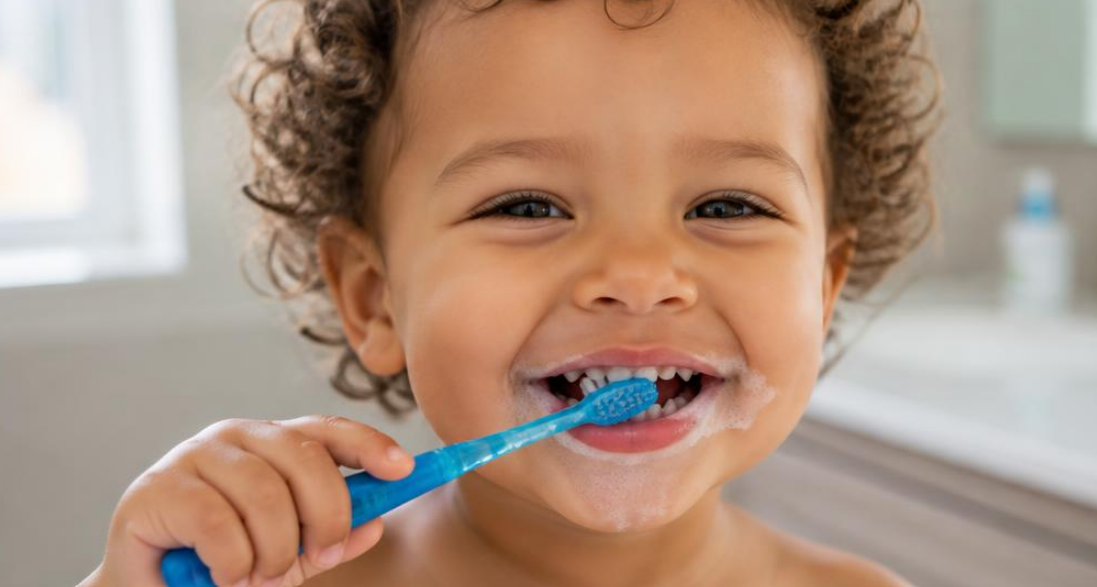
Quick answer: Look for a small brush head, soft rounded bristles and a chunky handle that survives a wet, determined grip. A manual brush works well for children between one and three years old. Around age three, a small electric brush becomes worth the switch, once a child sits still long enough for it to matter. At JuniorDental, parents hear a consistent message: supervision from an adult does more for a toddler's teeth than any brand printed on the handle.
What matters in a toddler's toothbrush
A brush head no wider than two of your toddler's teeth reaches every surface without gagging them. Bristles should be soft and rounded to protect young enamel and gums, and the handle needs to be thick enough for small, wet hands to grip without help. Avoid sharp edges or any part smaller than a five-centimeter circle, and choose BPA-free plastic or medical-grade silicone.
Matching the brush to the age
One to two years old: A silicone finger brush lets you feel every surface while brushing is still mostly your job. Move to a small manual brush as more teeth come in.
Two to three years old: Hand your toddler a manual brush with a training grip and let them go first for thirty seconds. Then take a "grown-up turn" to finish the job properly.
Three to four years old: A kid-sized electric brush with a two-minute timer cleans more thoroughly with less effort, once your child sits still long enough to use it.
Manual or electric: what the evidence shows
Research shows electric brushes remove somewhat more plaque, particularly between molars. Technique and time spent brushing still matter more than the brush itself. A manual brush used well beats an electric brush used badly, every time.
Brushing without the daily battle
Pick a consistent time, right after breakfast and before bed, so brushing becomes routine rather than a negotiation. A two-minute song or short video helps pass the time. Use a rice-grain smear of fluoride toothpaste under age three, moving to a pea-sized amount from three to six. Cover every surface, the outside, the inside, and the biting edge, and finish with a "tongue tickle" that most kids ask for by name.
When to swap the brush out
Replace a toothbrush every three months, after any illness, or the moment bristles start to splay outward. A worn brush cleans at roughly half the effectiveness of a fresh one.
Dr. Rafif Tayara, founder of JuniorDental, reminds parents that the brush matters less than the habit built around it, and a two-minute routine started early tends to stick for life. JuniorDental's pediatric wellness exams check in on brushing technique at every visit, alongside decay and gum health.
Frequently asked questions
Is electric better than manual for toddlers?
Somewhat, from about age three onward. Below that age, most children cannot sit still long enough to get the benefit. Pick whichever brush your child will use without a fight.
Should toddlers use fluoride toothpaste?
Yes. Pediatric dentistry guidance worldwide recommends a rice-grain smear of fluoride toothpaste starting with the first tooth, twice daily.
My toddler refuses to brush. What helps?
Try knee-to-knee brushing with a second caregiver, use a brushing app for younger kids, and avoid turning brushing into a punishment. Ask a pediatric dentist for behavioral coaching if refusal continues past a few weeks.
How long should a toddler brush for?
Two minutes, twice daily. A timer, a song, or an electric brush's built-in timer all make hitting that mark easier.