The Nighttime Habit That Could Be Reshaping Your Child's Face
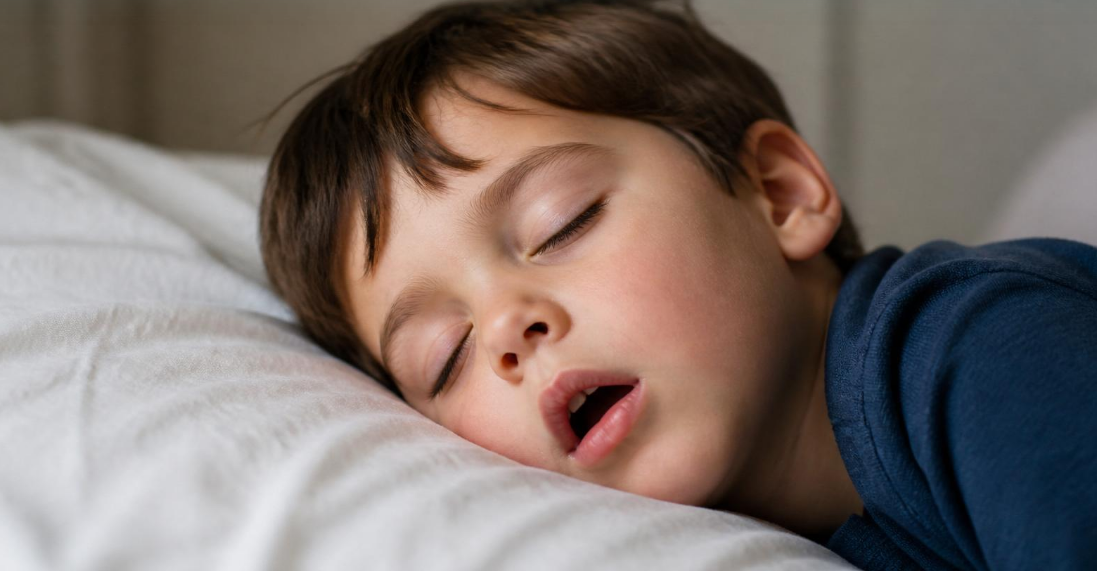
Quick answer: Chronic mouth breathing in a child is not a quirky habit, it is a sign the nasal airway is not doing its job. The signs parents miss most are snoring, sleeping with the mouth open, dry lips, dark circles under the eyes, restless sleep, daytime tiredness, and a narrow upper jaw. At JuniorDental, an airway evaluation is part of every standard exam, because catching this early protects growth, sleep and behavior before the pattern sets in.
Why the nose matters this much
A nose filters, warms and humidifies every breath before it reaches the lungs, and it produces nitric oxide along the way, something the mouth cannot replicate. When a child breathes through the mouth for months or years, tongue posture and jaw growth suffer as a result. Over time, mouth breathing may reshape the face, disrupt sleep, and even affect how a child performs at school.
Seven signs that tend to fly under the radar
1. Snoring, even soft snoring, which is never a normal sound in a child
2. Sleeping with the mouth open, worth checking about twenty minutes after your child falls asleep
3. Dry, cracked lips and chapped skin around the mouth
4. Dark circles under the eyes, sometimes called "allergic shiners," without any actual allergy present
5. Restless sleep with kicking, twisting, night waking, or bedwetting past age five
6. Daytime tiredness or hyperactivity, occasionally mistaken for ADHD
7. A long, narrow face with a high palate, something a dentist notices at routine checkups
What tends to cause it
Enlarged tonsils or adenoids sit near the top of the list, alongside allergic rhinitis, chronic congestion, a deviated septum or narrow nasal passages, weak lip seal and low tongue posture, and untreated tongue-tie.
What to do once you notice the signs
Record a thirty-second video of your child sleeping, face and mouth visible, sound on, and bring it to a provider who understands pediatric airway health. Assessment generally involves an airway-aware pediatric dentist working alongside an ENT and, when needed, a myofunctional therapist. Most cases improve meaningfully when caught early, which is the reassuring part of this whole picture.
Habits worth building at home
Encourage nose breathing during quiet play and reading. Rinse the nose daily with saline during allergy season, and address dust or mold triggers in the bedroom. Gentle lip-seal games like kazoo playing, humming or straw drinking build the muscle habits that support nasal breathing over time.
Dr. Rafif Tayara, founder of JuniorDental, built the clinic's approach around this exact connection between breathing and growth: every standard exam at JuniorDental includes an airway evaluation covering jaw width, tongue posture, palate shape and breathing patterns, from birth onward.
Frequently asked questions
Is mouth breathing bad for a child?
Yes, when it is chronic. Occasional mouth breathing during a cold is normal. Constant mouth breathing affects sleep quality, facial growth and overall health.
Could mouth breathing change my child's face shape?
Yes. Long-term mouth breathing is linked to a longer face, a narrow upper jaw, a gummy smile and crowded teeth, a pattern sometimes called "adenoid facies."
Should I try mouth tape on my child?
Only under professional guidance, and only after ruling out airway obstruction. It is never a first-line fix and should not be attempted at home without an assessment first.
Which specialist should I see first?
A pediatric dentist trained in airway health is a solid starting point. From there, they coordinate with an ENT, allergist or sleep physician as needed.