First Tooth? Why Your Toddler Needs a Dental Checkup Now
If your little one has cut their first tooth, you might wonder whether a dental visit is already in order. For many parents, age one feels early. At JuniorDental., we believe it is exactly the right time, and the reasoning makes sense once you hear it.
Milk teeth do more than help your toddler chew. They guide speech development, hold space in the jaw for permanent teeth, and shape how your child breathes and grows. Dental care that begins at age one gives your child a gentle, stress-free head start on all of it.
Why a First Visit at Age One Matters
Did you know the American Academy of Pediatric Dentistry recommends a first dental visit by a child's first birthday? Many parents are surprised by the recommendation. Dental problems in young children rarely announce themselves early. A three-year-old who arrives with a toothache may have had two or more years of untreated decay developing beneath the surface.
Baby teeth are vulnerable from the moment they arrive. We spot early cavity formation, visible as white spots on tooth enamel, as early as 12 months. Early detection of decay signs keeps treatment gentle and non-invasive, rather than requiring more involved care later.
A first visit also gives us a baseline for jaw development, tongue posture, and breathing patterns, all of which shape how your child grows. Concerns caught early are far simpler to address.
What Happens During Your Baby's First Dental Checkup
A first dental checkup for a one-year-old looks nothing like an adult appointment. There are no drills, no complicated equipment, and in most cases no X-rays. The whole visit centers on your toddler's comfort, and you are there for every moment of it.
We use a knee-to-knee exam position for infants and toddlers. You and the dentist sit facing each other with knees touching, and your child lies back with their head resting gently in the dentist's lap. Your toddler stays in direct eyeline with you the whole time, and the dentist gets a clear view of every tooth surface, the gum tissue, and the palate without any stress to the child.
During the exam, we check for early decay, review tooth eruption patterns, and look at jaw and airway development. Before you leave, you will have clear, practical guidance on home brushing, the right toothpaste amount for your child's age, and what to expect at each stage. Most first visits run around 30 minutes.
How We Keep Toddlers Calm During the Visit
In short, we use a three-step method called Tell-Show-Do: tell, show, then do, to take the fear out of the unfamiliar and help toddlers feel safe.
If your toddler cries during the appointment, know it is completely normal, and we are ready for it. Your child is not afraid of dentists. Your child is afraid of the unfamiliar. Our team trains specifically in child behavior management, and Tell-Show-Do is the method we lean on most.
The technique works in three steps. We tell your child what is about to happen, in warm, friendly words your toddler understands. We then show your child the instrument and demonstrate how it works before anything touches their mouth. Then we do the step, at exactly the gentle pace we described. Most toddlers settle within a few minutes once the experience feels predictable and safe.
The clinic itself plays a role in calming the visit. Play zones, cheerful colors, a cozy waiting area, and staff trained specifically in child behavior management all work together to prepare your child before the dentist even walks in.
How to Prepare Your Toddler for a Tear-Free First Visit
As a parent, you have more influence over your toddler's dental experience than you might think. What happens at home in the days before the appointment shapes how your child walks through the door.
Schedule the appointment at your toddler's best time of day. A well-rested child handles new environments far more steadily. A post-nap morning slot works well for most children under two. Avoid late afternoon slots during your child's known fussy windows.
Keep your language calm and positive in the days leading up to the visit. Words like pain, needle, or drill, even spoken in reassurance, plant worry in a toddler's mind. Dr. Rafif Tayara, Founder of JuniorDental, wrote a children's book called Danny and Sarah Go to Dr. Smile to help preschool-aged children feel ready and comfortable before their dental visit. The story, read together, gives your toddler a warm, familiar picture of what to expect. Your calm energy during the appointment matters too, since children take cues directly from the adults they trust most.
What We Recommend for Toddler Oral Health at Home
Did you know Dubai gets its tap water through desalination, which leaves fluoride levels well below the global recommendation? Many parents are not aware of it. The World Health Organization and the AAPD recommend 0.7 parts per million of fluoride for cavity prevention, and Dubai's supply falls short of it. We recommend professional fluoride varnish at each checkup as a safe, easy solution.
If your family enjoys dates, honey, or sweet drinks at home, know that milk teeth are more vulnerable to acid erosion than adult teeth. Sticky sugars linger on enamel long after eating, so a simple water rinse after sweet foods goes a long way toward protecting your child's teeth.
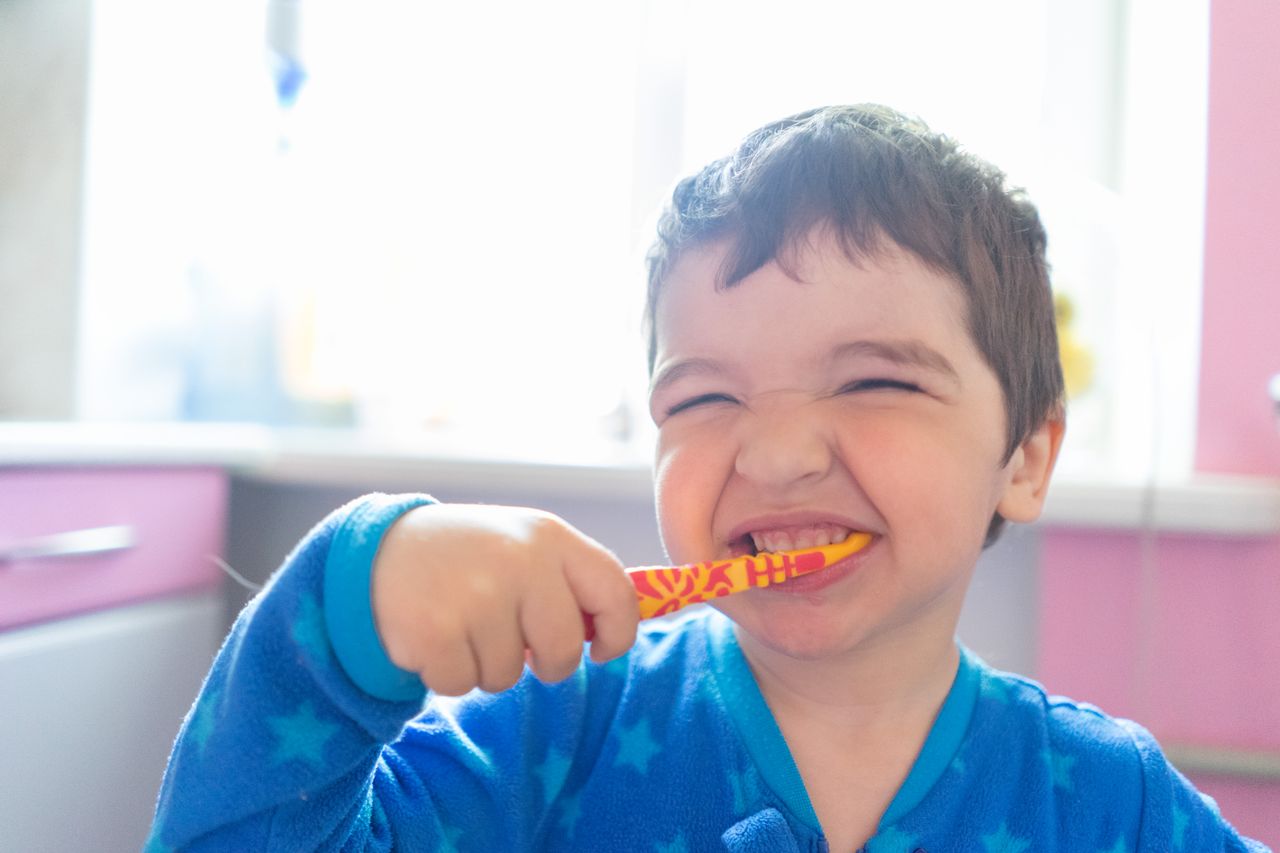
Start toothbrushing with the first tooth. A rice-grain amount of fluoride toothpaste is right for children under age three, per AAPD guidelines, and a pea-sized amount is right for ages three to six. For toddlers who resist brushing, a two-person approach helps: one parent holds the child gently and steady while the other brushes in short, consistent strokes.
Why Milk Teeth Matter More Than Most Parents Realize
Many parents believe baby teeth do not matter much because they fall out anyway. We hear the same reasoning regularly, and we understand why parents think it. The reality is a little different, and knowing it helps parents feel more confident in the care they give.
Milk teeth hold space in the jaw for permanent teeth to erupt in the correct position. A baby tooth lost too early to decay forces neighboring teeth to drift, leading to crowding and alignment issues that good early care prevents. Milk teeth also affect how your child speaks. Children who lose baby teeth prematurely may develop pronunciation difficulties that affect their confidence and communication.
Childhood tooth decay is described in pediatric dental research as one of the most common chronic conditions in children worldwide, ranking above asthma and hay fever in prevalence. Early dental care is among the most effective actions a parent takes for a child's long-term health.
At JuniorDental., our whole-child approach treats every early dental visit as a meaningful checkpoint in your child's overall health and development. We look beyond the teeth alone.
Our Approach to a Child's First Visit
JuniorDental. is a pediatric dentist in Dubai with two clinic locations, treating children from birth through early adulthood. Our team includes five doctors. Dr. Rafif Tayara, Founder and pediatric dentist, leads the team and brings 16 years of clinical experience across North America, the Middle East, and GCC countries. We have cared for more than 20,000 patients to date.
We use low-radiation digital X-rays that produce 80% less radiation than traditional systems, along with 3D wellness scans, intraoral scanners, and interactive touch screens in every treatment room. Our clinics include sensory-friendly features for children with sensory sensitivities or special needs.
An iPad check-in system, short wait times, and a play zone round out a visit built around your child's comfort.
Your child's first dental visit does not need to be something to worry about. With a little preparation at home and a calm, familiar environment at the clinic, it tends to be a steady, positive experience for you and your child. Book your child's first checkup at JuniorDental.