When a New Tooth Comes in Before the Baby Tooth Falls Out
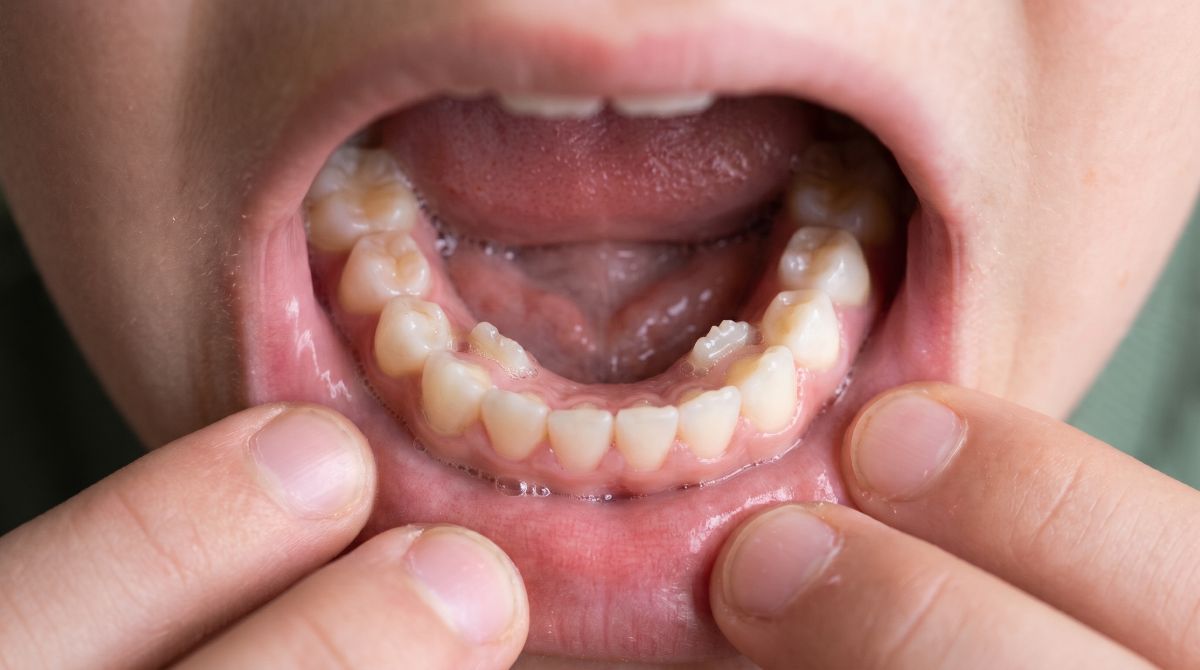
When a permanent tooth appears behind a baby tooth that has not fallen out, parents commonly call it shark teeth. It is most common at the lower front teeth around ages six to seven. In many children the baby tooth loosens within a few weeks, and the tongue guides the new tooth forward. If the baby tooth stays firm, JuniorDental checks it and decides whether to wait or help.
A second row of teeth looks alarming the first time you see it. The new tooth appears behind a baby tooth that is still firmly in place, and it feels as though something has gone wrong. Nothing has. Some lower permanent teeth form slightly toward the tongue, which is how a double row happens. Below, we cover what is going on, what usually follows, and the point at which JuniorDental would want to take a look.
Why does a new tooth come in behind the baby tooth?
TL;DR: Lower permanent front teeth form on the tongue side of the baby teeth, so a new tooth sometimes arrives behind a baby tooth whose root is still in place.
Baby teeth hold their place only until the adult teeth are ready. An incoming permanent tooth presses against the root of the baby tooth above it and dissolves it, a process dentists call resorption. As the root shortens, the baby tooth loosens and falls out, and the permanent tooth takes its place.
Lower front teeth are the usual exception. Their permanent replacements form slightly toward the tongue, so they sometimes come through behind the baby tooth and miss its root. With no root to dissolve, the baby tooth stays firm, and a temporary double row appears. The American Dental Association's charts give ages six to seven for the lower front teeth, for the baby tooth shedding and for the permanent tooth arriving.
Will the baby tooth fall out by itself?
TL;DR: In many children the baby tooth loosens within a few weeks, and everyday tongue pressure nudges the new tooth forward once space opens.
In many cases, yes. Once the baby tooth loosens and comes out, everyday tongue pressure tends to move the new tooth forward into the space.
Gentle wiggling with a clean finger or the tongue is fine. A firm tooth that is not budging is a job for a dentist, so please do not pull it at home.
Jot down the date you first noticed the new tooth. The date helps your dentist judge how long the baby tooth has been holding on.
When does a double row need a dental visit instead of watching?
TL;DR: If the baby tooth is still firm a few weeks after the new tooth appears, or the new tooth looks crowded, tilted or uncomfortable, book a visit.
Dental sources disagree on exactly how long to wait, with suggestions ranging from a couple of weeks to about two months. There is no magic number. A few weeks is a reasonable point to ask, and sooner is fine if something worries you.
Call sooner if the baby tooth is firm and the new tooth is already well through, if your child is uncomfortable, or if the new tooth looks crowded or tilted.
At the visit, we look at how firmly the baby tooth is holding, where the new tooth sits and how much room the jaw has. An X-ray sometimes helps by showing the roots and what lies underneath, and JuniorDental uses low-radiation digital X-rays, which use 80% less radiation than traditional ones.
Sometimes the answer is to keep watching, with a follow-up check. Sometimes a dentist helps a stubborn baby tooth out so the new tooth has room to move forward. If treatment is ever needed, JuniorDental keeps it minimally invasive, and we explain what we see and what we recommend.
Does a double row affect how the adult tooth lines up?
TL;DR: Usually the tongue moves the tooth into place, but a narrow jaw or a long delay may leave it tilted or short on room, so we keep watching.
In most children the new tooth settles into a good position once the baby tooth is out. Permanent teeth are larger than the baby teeth they replace, so lower front teeth may look crowded for a while even without a double row. A narrow jaw leaves less room, and a baby tooth that holds on for a long time may leave the new tooth tilted.
Jaw width is one of the things we assess at every standard exam, along with tongue posture, palate shape and breathing patterns, so we read a double row alongside how your child's jaw is growing. If crowding stays after the baby tooth has gone, interceptive orthodontics, which guides growing teeth and jaws, is the route we would discuss.
Frequently asked questions about shark teeth
Is it normal for a new tooth to come in before the baby tooth is out?
Yes. It is common at the lower front teeth around ages six to seven, and it looks more alarming than it usually is.
Will the baby tooth fall out by itself?
In many children, yes, within a few weeks to a couple of months. If the baby tooth stays firm, a dentist may help it along.
When does a double row need a dental visit rather than watching?
When the baby tooth is still firm a few weeks after the new tooth appears, when the new tooth looks crowded or tilted, or when your child is uncomfortable. Sooner is fine if you are unsure.
Does a double row affect how the adult tooth lines up later?
Usually the tongue guides the tooth into place once the baby tooth is out. A narrow jaw or a long delay may leave the tooth crowded, which is why we check jaw width at every standard exam.
How common is a double row?
Common enough that dentists see it regularly, mainly at the lower front teeth. Published estimates vary widely between studies, so we will not quote a single figure.
Should I pull the baby tooth myself?
If it is already loose and your child is happy to wiggle it, gentle wiggling is fine. If it is firm, bring your child in instead of pulling it at home.
If you are looking at a double row right now, a short visit is a reasonable way to settle the question. JuniorDental, a paediatric dentist in Dubai, will check the tooth, explain what we find and tell you whether waiting is the right call.