Why Is My Child Grinding Their Teeth at Night?
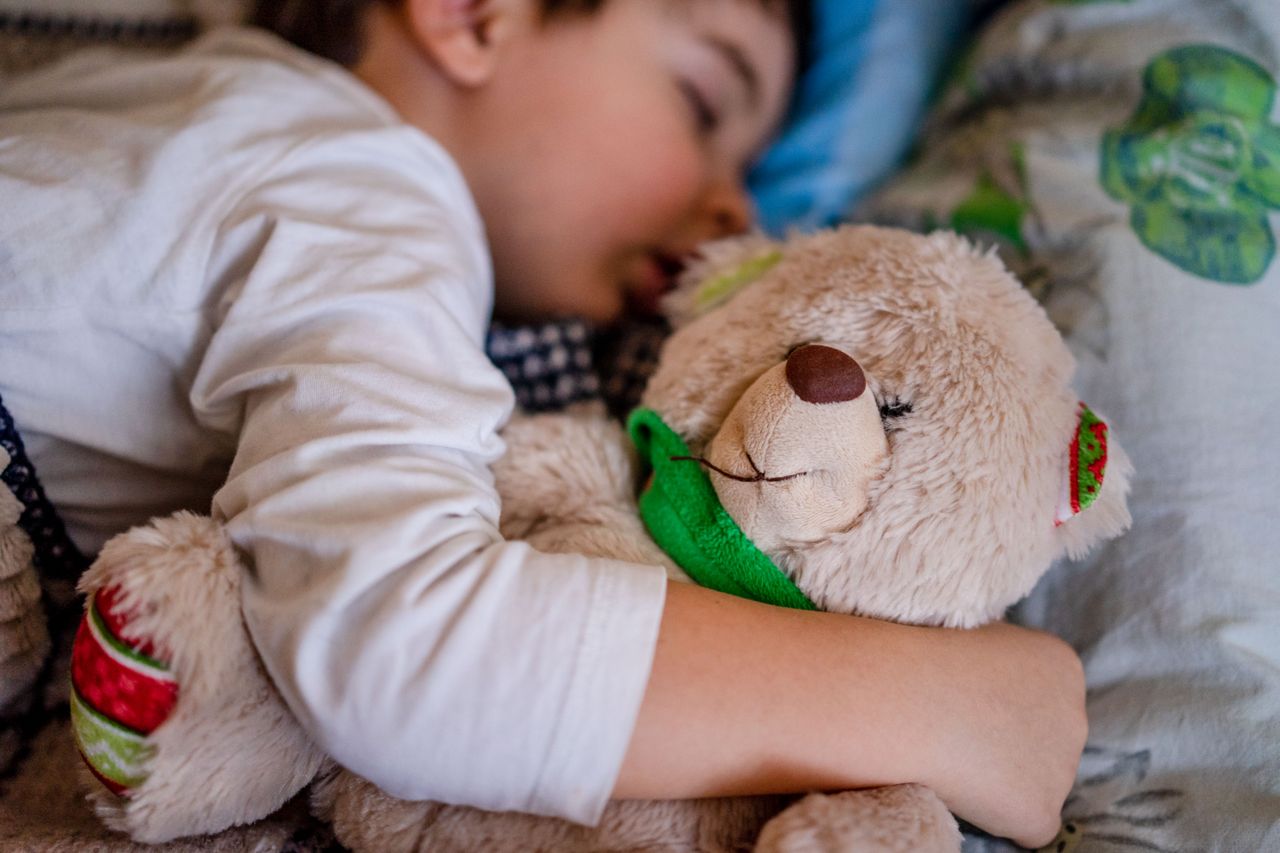
A child grinding teeth at night is usually going through a passing habit, not a dental emergency. Dentists call the habit bruxism. Stress, sleep patterns and a growing bite may each play a part, and many children grind less from around nine or ten years old. At JuniorDental, we look for wear on the teeth and suggest next steps only when the grinding persists.
The sound is hard to ignore. A low, steady scrape from the next room, and a parent lies awake wondering what it means. Did you know that studies put the share of children who grind anywhere between about 6% and 50%? A 2014 systematic review in the Dental Press Journal of Orthodontics found the figure moves with who is counting. Parent reports give higher numbers than clinical checks (Machado et al., 2014). Plenty of parents are listening to the same sound tonight, and nothing about it points to a parenting mistake.
What does a child grinding teeth at night sound and look like?
TL;DR: Most children never notice the grinding, so a parent's ear is the main clue, and flattened teeth or a sore jaw may add to the picture.
Your child sleeps through it. You hear a rhythmic grinding or clicking once the house goes quiet. Dentists rely mostly on what parents report. Overnight sleep studies are the gold standard, yet they cost too much for routine screening (Bulanda et al., International Journal of Environmental Research and Public Health, 2021).
Daytime clues are quieter. Your child may wake with a sore jaw or a headache, and the teeth may look flatter or more worn than before. Mayo Clinic lists flattened, chipped or worn enamel among the signs in children and adults alike. A child who grinds in the night and feels fine in the morning is common too.
Mention the noise at your child's next check-up even when nothing hurts. Mayo Clinic suggests the same, and a short note about what you hear gives the dentist something concrete to work with.
What causes paediatric bruxism?
TL;DR: No single cause explains paediatric bruxism, and stress, sleep, bite shape and family history may each contribute.
Researchers have not found one answer, so your child's grinding probably has a mix of contributors. A 2021 literature review names stress and anxiety among the risk factors (Bulanda et al., 2021). A new school or a house move, for example, may show up at bedtime as grinding, even when your child seems cheerful by day.
The American Academy of Pediatric Dentistry (AAPD) groups possible causes into two types in its policy on oral habits. One covers the brain and nervous system, such as emotional stress and sleep disturbances like sleepwalking. The other covers the shape of the bite, such as teeth that do not meet evenly.
The role of teething is less clear. Many parents link grinding in babies and toddlers to new teeth pushing through, and the idea is reasonable. The research behind teething as a cause is thinner, so treat it as a possible trigger, not a proven one.
The same 2021 review points to genetic factors, which may explain why grinding runs in some families. It also notes that certain prescription medicines may increase grinding episodes. If your child takes one, the prescriber is the right person to ask, and please do not change a dose on the strength of an article.
Could breathing during sleep be one of the causes?
TL;DR: Studies find an association between snoring or disrupted breathing and grinding, but the data do not prove that one causes the other.
Possibly, in some children. A 2023 systematic review in Frontiers in Oral Health looked at 16 studies. It found a positive association between sleep bruxism and sleep-related breathing problems such as snoring (Restrepo-Serna and Winocur, 2023). The authors suggest a narrow upper airway may sit behind the link.
An association is a pattern in the data, nothing more. The review does not show that poor breathing makes a child grind. We mention the connection as a reason to look, not as a promise that one fix will solve the other.
Airway evaluation is part of every standard exam at JuniorDental. We look at jaw width, tongue posture, palate shape and breathing patterns, and the details give context when a child also grinds. Tell us about snoring, restless sleep or mouth breathing at night. Your child's paediatrician is the right person to hear about snoring too, since a medical professional leads the assessment of sleep and breathing.
What helps at home when your child grinds their teeth at night?
TL;DR: A calm evening, a steady bedtime and a listening ear are low-risk places to start, though none of them is a proven cure.
The 2021 literature review lists relaxation techniques and behavioural strategies among management options for children. At home, the advice translates into something modest. A predictable wind-down, such as a bath, a story and softer lights, gives a busy child time to switch off.
If a worry sits behind the grinding, a quiet chat at the end of the day sometimes brings it out. Your child does not need a long conversation. A few minutes of your attention is enough.
None of it guarantees a quiet night. A bout of grinding after a rough day does not mean your routine failed.
When does a child's grinding need treatment rather than monitoring?
TL;DR: Grinding that lasts, wears down teeth or causes pain deserves a dental assessment, while occasional grinding without symptoms may only need watching.
Most childhood grinding passes without treatment. The AAPD notes preliminary evidence that juvenile bruxism tends to resolve by itself and does not progress into adult bruxism. The same policy supports stepping in when grinding lasts long enough, or grows intense enough, to damage permanent teeth or affect a child's wellbeing.
A closer look is worth booking when you notice flattened or chipped teeth, jaw pain, morning headaches, or sleep that seems broken. Permanent teeth do not grow back, so grinding that carries on as they arrive deserves attention too. A child who also snores or breathes through the mouth gives us another reason to ask.
None of the signs means something serious has happened. They mean a conversation is worth having.
At a JuniorDental wellness exam, we check the teeth for wear, review breathing and jaw development, and talk through whether watching and waiting is enough. If it is not, we explain the options in plain language and agree the next step with you.
Frequently Asked Questions
Is teeth grinding in toddlers normal?
Yes, grinding is common in toddlers and young children, and most children grow out of it. Reviews report rates from about 6% to 50%, depending on how researchers measure it. Baby teeth are temporary, so light grinding without pain or visible wear usually needs monitoring at routine check-ups, not treatment.
Does my child need a mouthguard for grinding?
Many children do not. Mayo Clinic notes that treatment is unnecessary in many childhood cases, and a 2021 review links night-time appliances mainly with protecting permanent teeth. A child's jaws keep growing, so please talk to us before buying a guard from a shop.
Will my child grow out of teeth grinding?
Most do. A 2021 review reports that grinding declines from around nine or ten years of age. Children vary, so keep mentioning it at check-ups. If grinding continues after permanent teeth arrive, or the teeth start to look worn, we would like to take a closer look.
Does stress cause teeth grinding in children?
Stress and anxiety rank among the risk factors researchers discuss most, but they are not the only ones. Sleep, bite shape, genetics and breathing during sleep may contribute as well. A child who grinds is not necessarily anxious, and a calmer routine may help without guaranteeing a quiet night.
Does teeth grinding mean my child has a breathing problem?
Not necessarily. Studies find an association between grinding and sleep-related breathing problems such as snoring, yet many children grind with no breathing concern at all. If your child also snores, breathes through the mouth or sleeps restlessly, mention it to us and to your paediatrician.
Does grinding damage a child's teeth?
Heavy, long-lasting grinding may flatten or chip teeth, and Mayo Clinic lists worn enamel among the signs. Light grinding may leave no mark. Baby teeth fall out naturally, so permanent teeth are the main concern, which is why the AAPD supports treatment when grinding threatens them.
If your child's grinding comes with snoring, restless sleep or mouth breathing, we would point you to our Founder, Dr Rafif Tayara. She trained in paediatric dentistry and orthodontics, holds a sleep dental medicine qualification from Tufts University, and works with a team of ENT doctors, sleep surgeons and therapists when a child needs wider care. Note when you hear the grinding and how frequently, then book a visit at either of our two Dubai clinics through juniordental.ae.