Why ‘It Depends’ Is the Honest Answer to When a Child Needs Braces
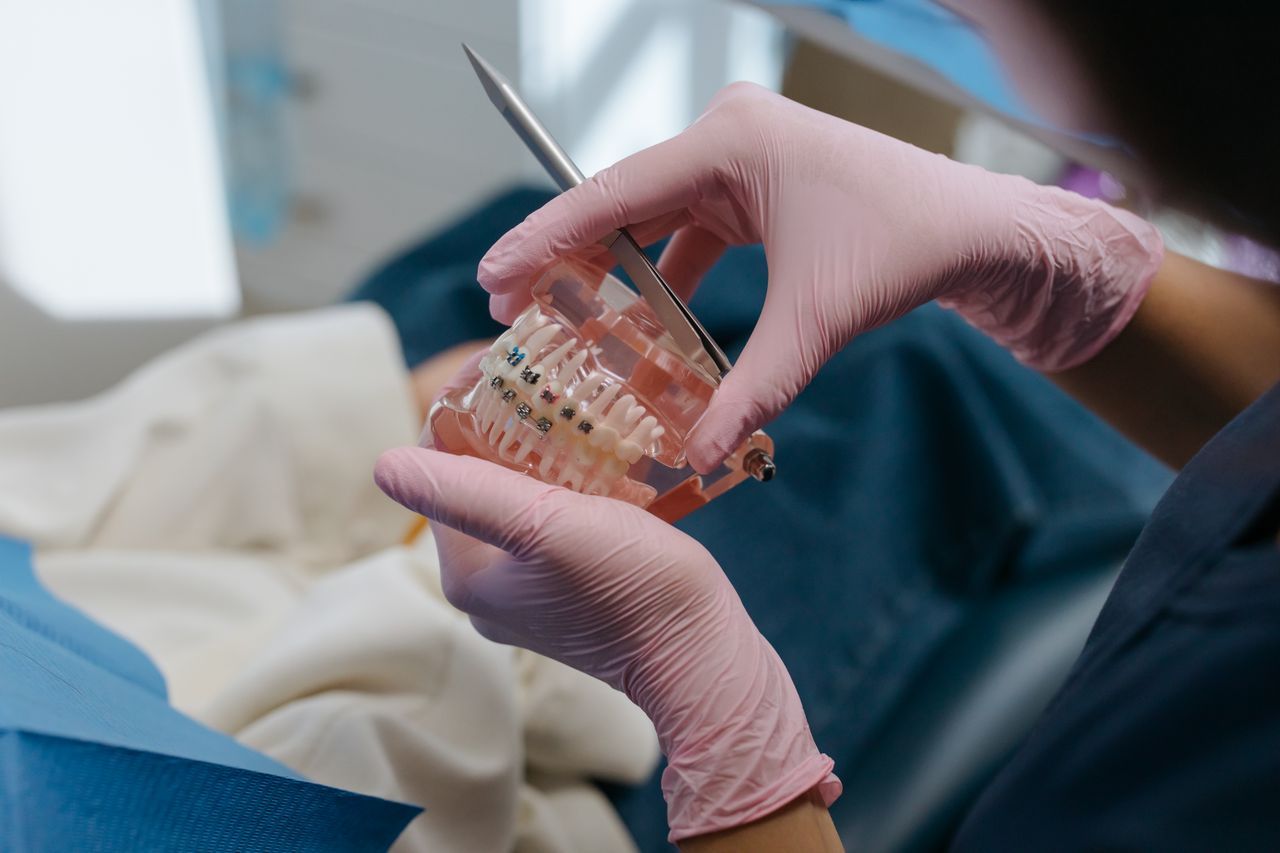
The American Association of Orthodontists recommends a first orthodontic check-up no later than age seven, yet no single age suits every child. Some children need an early look at jaw growth, some need a few years of watching, and some start treatment as teenagers. At JuniorDental in Dubai, we follow each child’s growth and help parents choose timing that fits.
If you have wondered whether your child is too young for braces, or whether the right moment has already slipped past, the questions are fair ones. Nobody hands parents a calendar for jaw growth, and the honest answer does depend on the child.
What Age Should a Child Get Braces?
TL;DR: No single age works for every child. The American Association of Orthodontists recommends a first check-up no later than age seven, and treatment starts only when a child’s bite calls for it.
The American Association of Orthodontists (AAO) recommends a first orthodontic check-up no later than age seven. The AAO also says no single “right” age exists for treatment, and a check-up is a separate step from starting treatment. Only a few bite problems need correction around age seven, and not every treatment involves braces.
Parents researching braces for kids in Dubai will hear the number seven early, and for good reason. Around that age, children carry a mix of baby and adult teeth, so an orthodontist sees how the bite is forming and spots subtle jaw growth problems while baby teeth still hold their places. The American Academy of Pediatric Dentistry (AAPD) describes this mixed stage as running from roughly age six to 13.
Because only a few problems need correction at seven, a first visit may end with a plan to keep watching rather than an appliance in the mouth. A plan to watch is a perfectly good result.
Which Signs Mean It Is Worth Asking Sooner?
TL;DR: Early or late loss of baby teeth, trouble chewing, mouth breathing, thumb-sucking, crowded teeth and jaws that shift or click are all reasons to ask before age seven.
Parents are sometimes the first to notice that something looks off. The AAO lists baby teeth that fall out early or late, difficulty chewing or biting, breathing through the mouth, thumb-sucking, crowded or blocked-out teeth, and jaws that shift or make sounds. Speech difficulties, cheek biting and grinding or clenching appear on the longer list too. If any of them sounds familiar, you do not need to wait for the seventh birthday.
Straight-looking baby teeth do not rule out a developing bite problem, and some problems only show up to a trained eye. At JuniorDental, the airway evaluation in every standard exam looks at jaw width, tongue posture, palate shape and breathing patterns, so jaw development already gets a look at regular check-ups. None of the signs guarantees treatment. Most only tell an orthodontist where to look more closely.
Is It Possible to Start Treatment Before All the Adult Teeth Arrive?
TL;DR: Yes. Interceptive treatment guides a growing jaw while baby and adult teeth share the mouth, with palatal expanders or Invisalign First as options.
Orthodontists call it interceptive treatment: guiding the jaw and the incoming teeth while they are still changing. A narrow upper jaw is one reason to start, because a narrow arch leaves less room for adult teeth. JuniorDental uses fixed palatal expanders for moderate to severe narrowing and removable palatal expanders for mild to moderate narrowing. Expansion between ages six and 12 widens the upper arch and may open more space in the nasal airway.
Invisalign First offers growing children a different route: clear aligners with no brackets or wires that widen the arch and straighten teeth in the same treatment. Some children need only observation, and the orthodontic team decides after studying the bite.
Will Early Treatment Mean Less Work Later?
TL;DR: For some children it may. Treatment at age seven may reduce later orthodontic work and, in some cases, remove the need for it, but the benefit depends on the bite problem and every child’s growth is different.
Parents deserve a straight answer here. Early interceptive treatment at age seven may reduce the orthodontic work a child needs later and, in some cases, remove the need for it. Nobody should promise that a child will never need braces, and we do not.
Research explains why the answer varies. A 2018 Cochrane review of randomised trials looked at children with prominent upper front teeth. Treatment that started between ages seven and 11 gave similar overall results to treatment that waited until adolescence, with one exception: early treatment lowered the risk of injury to the protruding front teeth. The AAPD adds that treatment benefits many children but does not suit every child with a developing bite problem.
Age sets the date for a first look. The bite pattern decides what happens next.
Is It Too Late If My Child Is Already a Teenager?
TL;DR: No. A teenager has not missed the chance, and an orthodontic assessment shows which options suit your child now.
If your child is older than seven, the AAO says it is not too late for a check-up. Children keep growing through their teens, so an assessment still matters, though the plan looks different. In the teen years, most or all of the adult teeth have arrived, so the orthodontist plans around the final fit of the bite. The AAPD describes the full permanent dentition as the stage for final orthodontic diagnosis and treatment.
Some options work best earlier. Palatal expansion, for example, fits the years between six and 12, so an early check-up leaves more choices open. A later check-up still gives your child a proper assessment, and JuniorDental cares for patients from birth through early adulthood, so teenagers are welcome.
If nobody mentioned an early check-up when your child was seven, please do not carry guilt about it. The most useful step now is a conversation about where your teenager’s bite stands.
Frequently Asked Questions
Is there one right age, or does it vary by child?
It varies. The AAO recommends a first check-up no later than age seven and says no single age suits every child. Jaw growth, tooth eruption and bite patterns differ from child to child, so timing follows the bite.
What are the earliest signs JuniorDental looks for?
Every standard exam includes an airway evaluation of jaw width, tongue posture, palate shape and breathing patterns, and assessments start from birth. At home, early or late loss of baby teeth, crowding and mouth breathing are signs on the AAO’s list.
Does a first orthodontic visit mean my child will need braces?
No. A check-up and the start of treatment are separate steps. Only a few bite problems need correction around age seven, so a first visit may end with a plan to keep watching.
Is it possible to start treatment before all the adult teeth arrive?
Yes. Interceptive treatment happens while baby and adult teeth share the mouth. Palatal expanders suit a narrow upper jaw, and Invisalign First uses clear aligners for growing children and handles arch expansion and alignment together.
Does starting early mean a shorter treatment later?
It may. Early interceptive treatment at age seven may reduce later orthodontic work and, in some cases, remove the need for it. Results depend on the bite problem and every child’s growth is different, so we do not promise an outcome in advance.
What if my child is already a teenager?
A teenager has not missed the chance. The AAO says it is not too late for a check-up after age seven, and JuniorDental cares for patients through early adulthood. The plan centres on the adult teeth that have already arrived.
How regularly should my child see the dentist while we keep an eye on the bite?
The AAPD recommends check-ups every six months, or on a schedule that matches the child’s risk. Regular visits let the dentist follow tooth eruption and bite development over time.
Wherever your child sits on the timeline, a conversation tells you more than a guess. The team at JuniorDental in Dubai is glad to look at your child’s smile, talk through timing, and plan next steps at a pace that suits your family.