Orofacial Myofunctional Therapy for Children
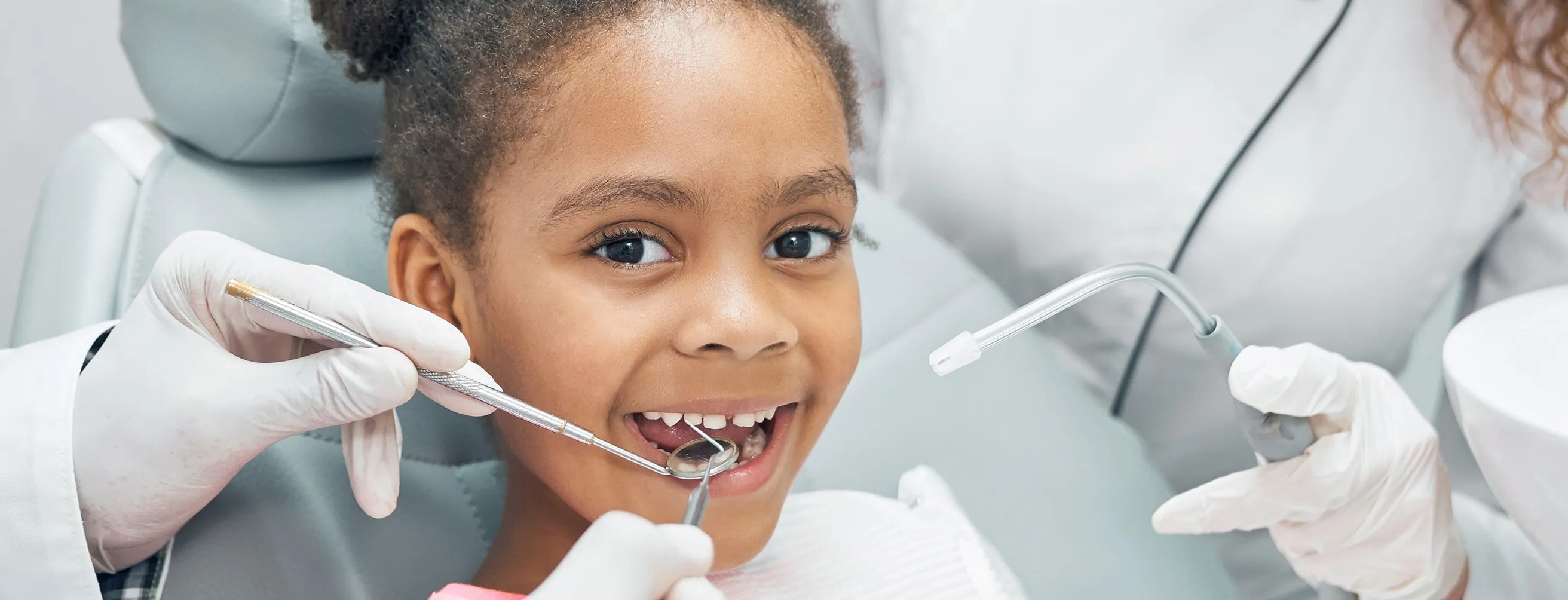
At JuniorDental, it sits inside our Airway & Breathing care, because how a child breathes, swallows and rests the tongue shapes how the face grows.
What is orofacial myofunctional therapy?
Think of it as physiotherapy for the muscles around the mouth. A short daily routine of simple exercises trains the tongue, lips and cheeks toward one target position: lips closed, tongue resting against the roof of the mouth, teeth slightly apart, breathing through the nose.
The position matters for growth. Low tongue posture reduces the natural widening forces on the upper jaw, and mouth breathing contributes to longer, narrower facial growth patterns. Narrow jaws then restrict airway space. Habit retraining while a child still grows gives the jaw room to develop.
Signs your child may benefit
Mouth open at rest, during the day or in sleep
Snoring or restless, tossing sleep
A tongue that rests low or pushes between the teeth when swallowing
A lisp, or unclear “s” and “th” sounds
Messy or very slow eating, or a lasting preference for soft foods
Thumb sucking or pacifier use beyond age three
Teeth that drift back after orthodontic treatment
One sign alone proves little. A pattern across several gives us a reason to look closer. Raise snoring with your paediatrician too.
How we assess your child
Every standard exam at JuniorDental includes a full airway evaluation. Our dentists look at jaw width, tongue posture, palate shape and breathing patterns, then watch how your child swallows and holds the lips at rest. When the findings point beyond the mouth, such as enlarged tonsils, allergies or a tongue-tie, we bring in our wider team of ENT doctors, speech and feeding therapists and surgeons.
Read more about our airway assessment.What therapy involves
We build each programme around your child’s age and exam findings. Sessions are short, five to ten minutes once or twice a day at home, and stay close to a game for younger children. Common exercises include resting the tongue tip on the spot behind the upper front teeth, holding a small card between the lips, humming or straw-breathing drills for nasal breathing, and swallowing with the tongue up.
We introduce each exercise in the clinic, review progress at follow-up visits and show you how to support practice at home without constant correction. Some children also use a removable appliance alongside the exercises. We recommend one only when the exam points to it.
Progress looks quiet at first. Children forget the new tongue position constantly in the early weeks, which is normal. Steady practice over months matters more than any single session.
How long it takes, and when to start
Most programmes run around six to twelve months, with follow-up visits every few weeks. Simple breathing and habit games may start around age four. Full programmes work best between ages six and twelve, once a child is ready to practise with some independence. Airway assessment itself begins from birth, so we track tongue and muscle function long before a formal programme starts.
How it fits with other care
Myofunctional therapy works best as one part of a plan.
Orthodontics. Palatal expanders and aligners open space. Therapy trains the tongue and lips to support the new position. Palatal expansion between ages six and twelve widens the arch and opens nasal airway space, so we plan the two together through interceptive orthodontics and Invisalign First.
Tongue-tie. When a tight tongue or lip tie limits tongue lift, a laser frenectomy may form part of the plan before therapy starts.
Oral habits. Thumb sucking, tongue thrust and open-mouth posture tend to travel together. Our oral habit retraining support covers the habit itself, while therapy retrains the muscles behind it.
Sleep and breathing. Therapy supports nasal breathing, yet it is not a stand-alone treatment for sleep apnoea. When findings point that way, we refer your child to an ENT or sleep specialist.
Related services
Airway & Breathing
Our hub for mouth breathing, snoring, tongue-tie and oral habits.
Learn more →Oral habit retraining & support
Thumb sucking, tongue thrust and nail biting.
Learn more →Tongue-tie & frenectomy
Laser care for a tight tongue or lip tie.
Learn more →Baby Oral Health Clinic
Feeding, latch and early airway checks from birth.
Learn more →Interceptive Orthodontics
Guiding jaw growth between ages six and ten.
Learn more →Pediatric Orthodontics
Expansion and clear aligners for kids and teens.
Learn more →Pediatric Oral Wellness Exam & Cleanings
The six-monthly visit where we first look at tongue posture and breathing.
Learn more →
Further reading
Why Some Kids Need More Than Braces to Fix Their BiteYour Child’s Dentist May Spot This Breathing Problem Before Anyone Else DoesWhy a Growing Jaw Makes Mouth Breathing an Early ProblemThe Swallow Pattern That’s Normal in Infancy and a Concern by Grade SchoolFrequently asked questions
At what age does myofunctional therapy start?
Simple breathing and habit games may begin around age four, and full programmes work best between ages six and twelve. Airway assessment starts from birth, so we track tongue and muscle function well before then.
Will therapy replace braces or expanders?
No. Therapy retrains muscle habits. It does not widen a narrow jaw or straighten teeth. Some children need orthodontic care, some need therapy, and many benefit when the two work together.
Does therapy treat snoring or sleep apnoea?
A child who snores needs a proper check, so raise it with your paediatrician. Therapy supports nasal breathing and tongue posture, but it does not replace medical care for sleep apnoea. We work with ENT and sleep specialists when a child needs one.
How long does a programme take?
Most programmes run around six to twelve months, with short daily practice at home and follow-up visits every few weeks. Home practice drives the result, more than clinic time does.
Is myofunctional therapy painful?
No. The exercises are gentle and play-based for younger children. Some children also wear a removable appliance, which we recommend only when the exam shows a need.
Does mouth breathing always mean my child needs therapy?
Not always. A blocked nose during a cold explains short-term mouth breathing. When the habit continues after the cold clears, we check the nose, tonsils and tongue posture first, then decide on the right plan.
How do I support practice at home?
Keep sessions short and consistent, and turn them into a routine such as after brushing. A gentle reminder about lip closure during quiet activities works better than repeated correction.
Dr Rafif Tayara, our founder and a Sleep Dental Medicine specialist, built the clinic’s approach around the whole mouth: teeth, tongue and airway as one picture. Contact us, or read more on Airway & Breathing.
Didn’t find the answer to your question?
Contact usThe skilled hands that care for your smile
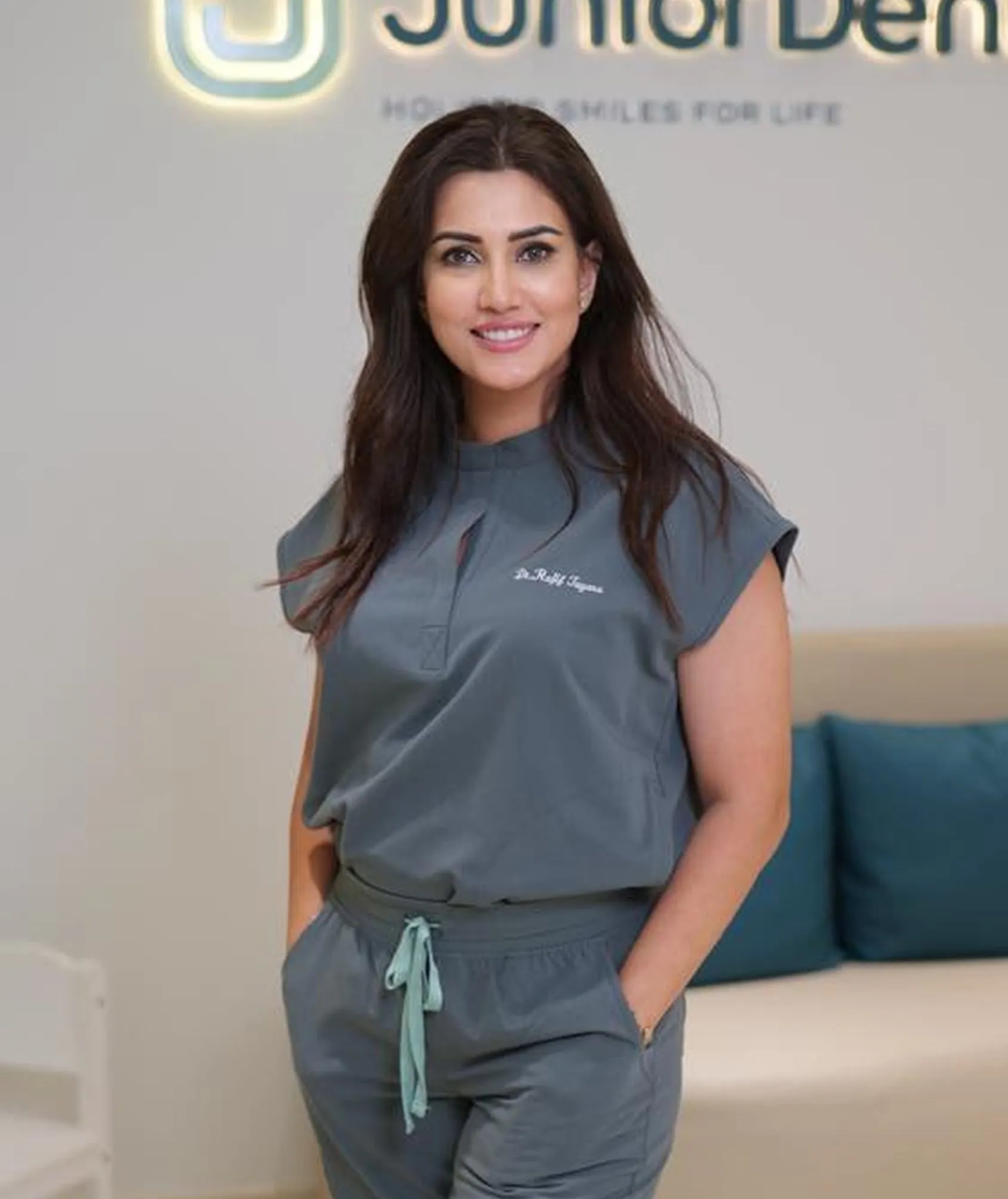


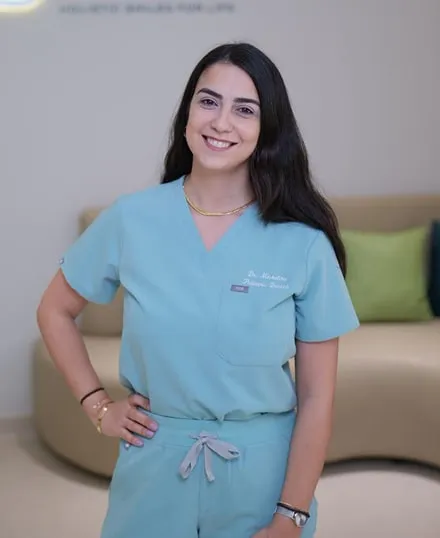
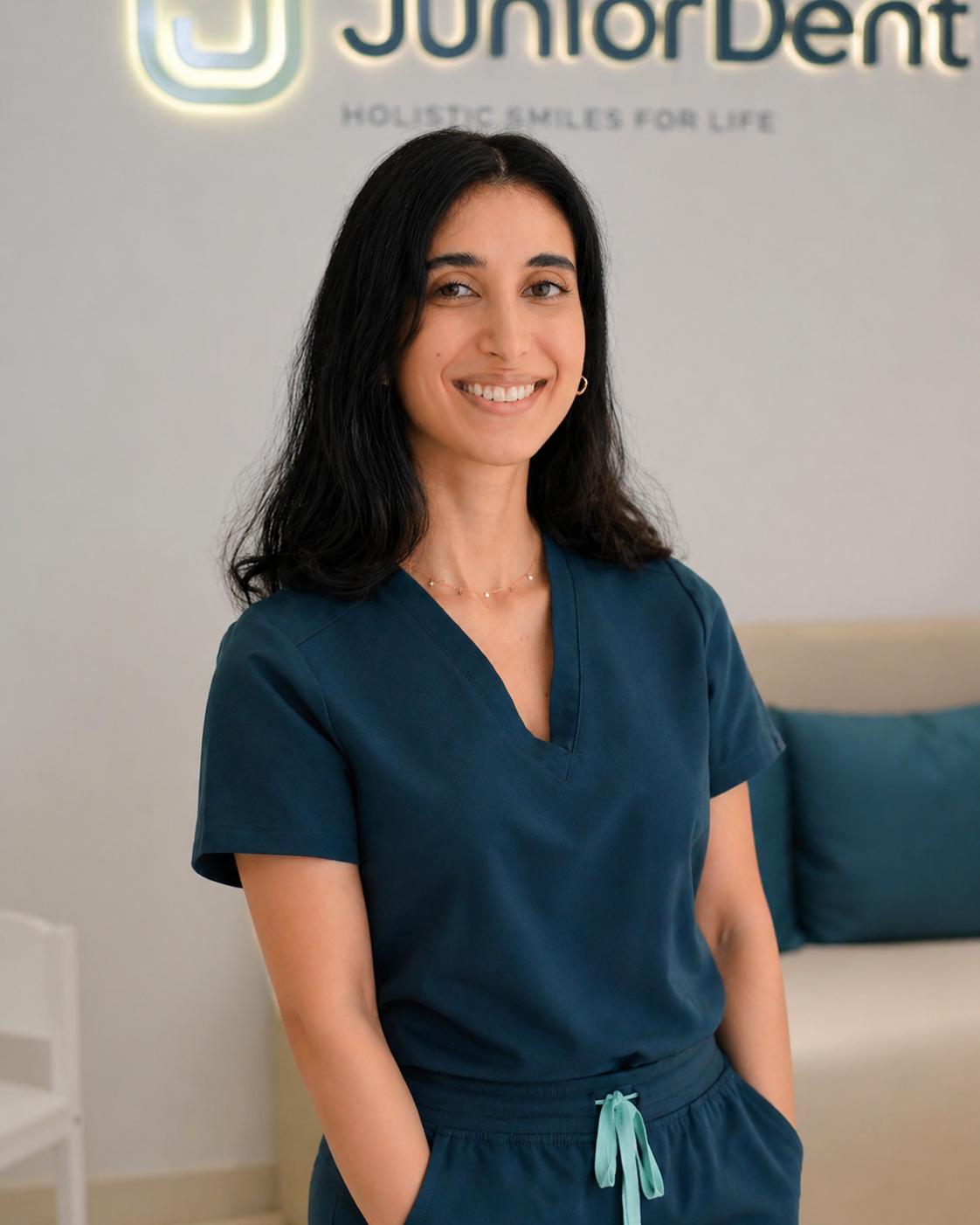


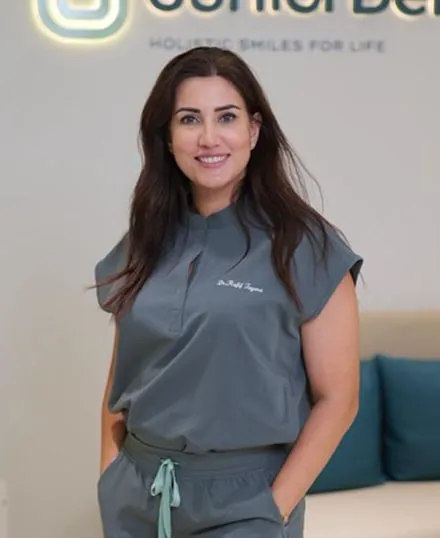
She has practiced in both private clinics and hospital-based settings in North America, the Middle East, and GCC countries. Her practice blends modern pediatric dentistry, with her own expansion protocols in interceptive orthodontics, and myofunctional therapy to address the root causes of dental and airway issues in growing children, and revolves around a multi-disciplinary team of ENT doctors, speech and feeding therapists, sleep surgeons and physiotherapists. She is also highly skilled in treating and managing special needs children and has played a significant role in raising oral health awareness in the Middle East and GCC region through various media channels, conferences and
She is also the author of the children’s book “Danny and Sarah Go to Dr. Smile,” which helps children overcome dental anxiety through an engaging and reassuring story — reflecting her commitment to making dental care a positive, empowering experience.
A proud mum of three, Dr. Tayara combines her professional expertise with a deeply personal understanding of what families need — creating an environment where every child feels safe, understood, and cared for. Her mission is simple yet powerful: to help children breathe, grow, and smile better for life.
You can find her on:
Instagram @doctortayara.
LinkedIn @doctortayara.
Linktr @doctortayara.
Website @doctortayara.

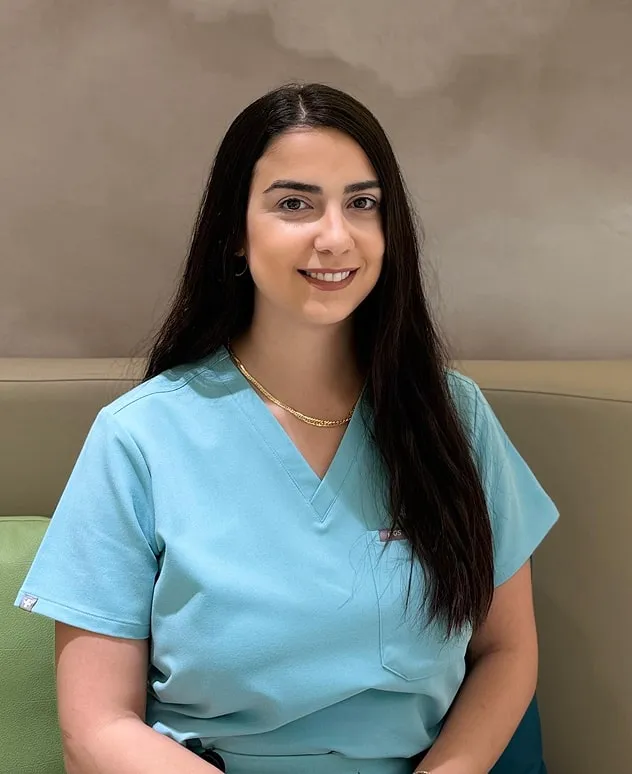
Dr. Micheline brings warmth, expertise, and a deep passion for children’s oral health. As a mom of two herself, she understands how to make every child feel safe, heard, and comfortable at the dentist.
She specializes in a full range of pediatric dental treatments including crowns, fillings, pulp therapy, laughing gaz, and general anesthesia (GA) for more complex cases. She is also a certified Invisalign First provider, offering early orthodontic solutions for growing smiles.
Frequently asked questions