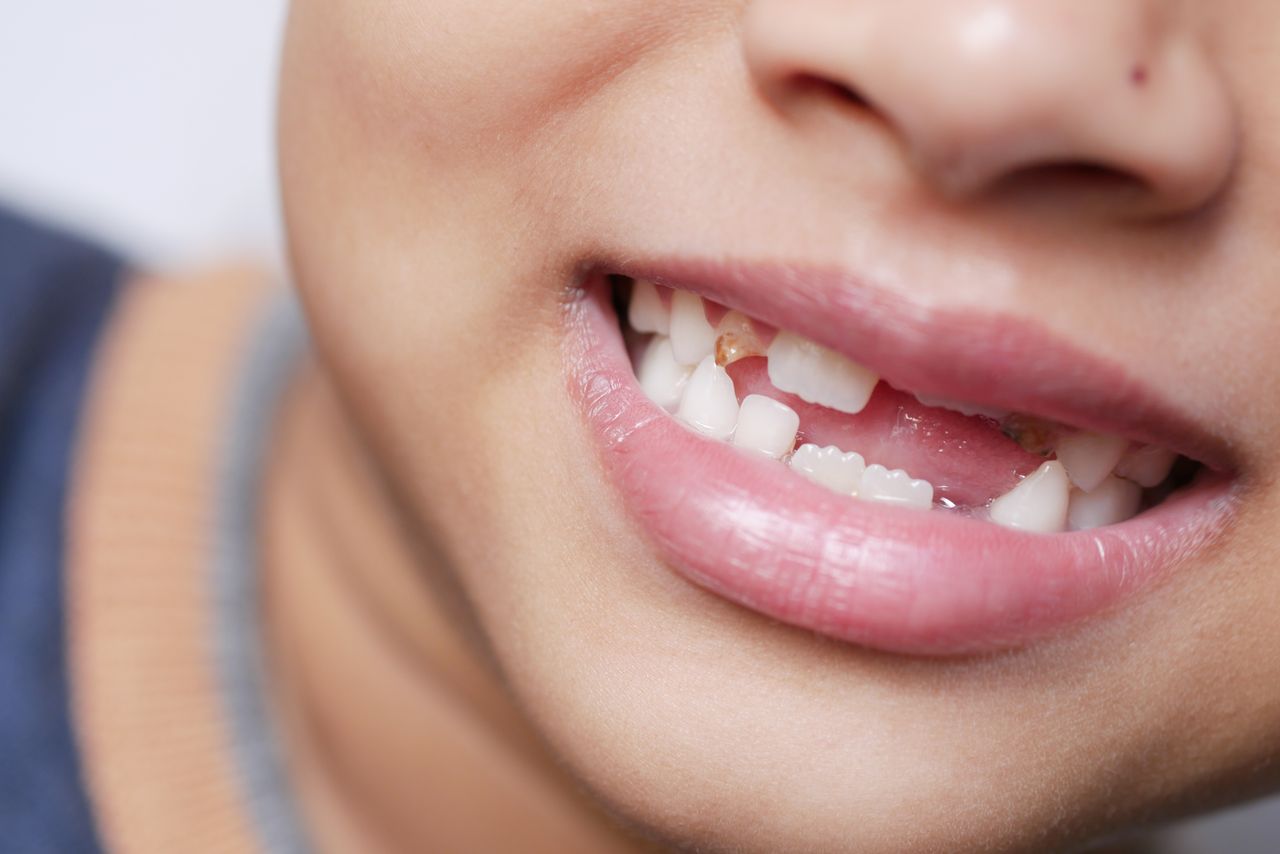
A Baby Tooth With an Affected Nerve Doesn't Always Need to Come Out

When a cavity reaches deep enough to affect the nerve inside a tooth, removing the tooth is not the only option available. At JuniorDental, Dr. Julie Su performs pulp therapy to treat the affected nerve tissue and keep the baby tooth in place until it is ready to fall out naturally.
Why Would a Baby Tooth's Nerve Need Treatment?
Untreated decay may reach the pulp, the soft tissue inside a tooth that contains nerves and blood vessels, leading to pain and infection.
Baby teeth have thinner enamel and dentin than permanent teeth, so decay reaches the pulp faster than many parents expect. Dr. Su checks how deep a cavity runs with an exam and, when needed, an X-ray before deciding on a filling or pulp therapy.
A tooth injury, such as a hard fall, may also affect the nerve even without visible decay. Dr. Su watches for color changes or sensitivity in an injured tooth over the following weeks, since nerve damage does not always show up immediately.
What Is the Difference Between a Pulpotomy and a Pulpectomy?
A pulpotomy removes only the affected portion of the pulp near the crown, while a pulpectomy removes the entire pulp from the tooth and its roots.
Dr. Su chooses a pulpotomy when decay or injury has reached the pulp near the top of the tooth but the tissue in the roots remains healthy. The procedure removes the affected tissue, treats the remaining healthy pulp with a protective medicated dressing, and usually finishes with a crown to protect the tooth.
A pulpectomy goes further, clearing the pulp from the entire tooth, including the root canals, when the whole nerve is affected rather than the top portion. Dr. Su fills the cleaned root canals with a material designed to resorb along with the baby tooth's roots over time.
Does Pulp Therapy Hurt More Than a Filling?
Dr. Su performs pulp therapy under local anesthesia, so a child should not feel pain during the procedure itself.
Dr. Su numbs the area thoroughly before starting, the same step used for a routine filling, so the sensation during treatment feels similar for each procedure. Some children feel mild soreness for a day or two afterward as the area settles, similar to recovery after any dental procedure involving deeper work.
For children who feel especially anxious about a longer appointment, Dr. Su sometimes combines pulp therapy with conscious sedation, drawing on her separate certification in that area. This combination keeps the child relaxed through a procedure that takes longer than a standard filling.
Why Save a Baby Tooth Instead of Extracting It?
A baby tooth left in place holds space for the permanent tooth beneath it and continues to support chewing and speech until it falls out naturally.
An early extraction may solve the immediate problem, but it leaves an open space that neighboring teeth may drift into over time. Dr. Su weighs pulp therapy against extraction based on how much of the tooth structure remains healthy and how much time is left before the permanent tooth arrives.
At JuniorDental, Dr. Julie Su treats saving a baby tooth as the first option whenever the tooth structure allows for it, reserving extraction for cases where infection or damage has gone too far to repair.
Frequently Asked Questions
How do parents know if their child needs pulp therapy?
Signs include a toothache, sensitivity to hot or cold that lingers, or a visible dark spot on a tooth, though some affected teeth show no obvious symptoms at all. Dr. Su confirms the diagnosis with an exam and an X-ray rather than relying on symptoms alone.
Will the tooth still fall out at the normal time after pulp therapy?
Yes. A tooth treated with pulp therapy continues to loosen and fall out on the same general timeline as an untreated tooth, since the procedure treats the nerve, not the natural process guiding the tooth out. Dr. Su tracks the tooth at regular visits to confirm it is progressing normally.
Does pulp therapy ever fail?
In a small number of cases, treated pulp tissue becomes infected again or does not heal as expected, which usually shows up as pain, swelling, or a loose tooth. Dr. Su checks treated teeth at follow-up visits and, when needed, an X-ray to confirm the treatment is holding.
Is pulp therapy only for cavities, or does it treat injuries too?
Dr. Su performs pulp therapy for teeth affected by deep decay as well as teeth injured in a fall or impact, since either cause damages the pulp in a similar way. The treatment approach depends on how much of the pulp the decay or injury reaches, not on what caused the damage.
Does a tooth treated with pulp therapy need a crown afterward?
Frequently, yes. A tooth that has undergone pulpotomy or pulpectomy loses some structural strength, so Dr. Su generally places a crown afterward to protect it from breaking under normal chewing forces. The crown also seals the tooth against new decay reaching the treated area.