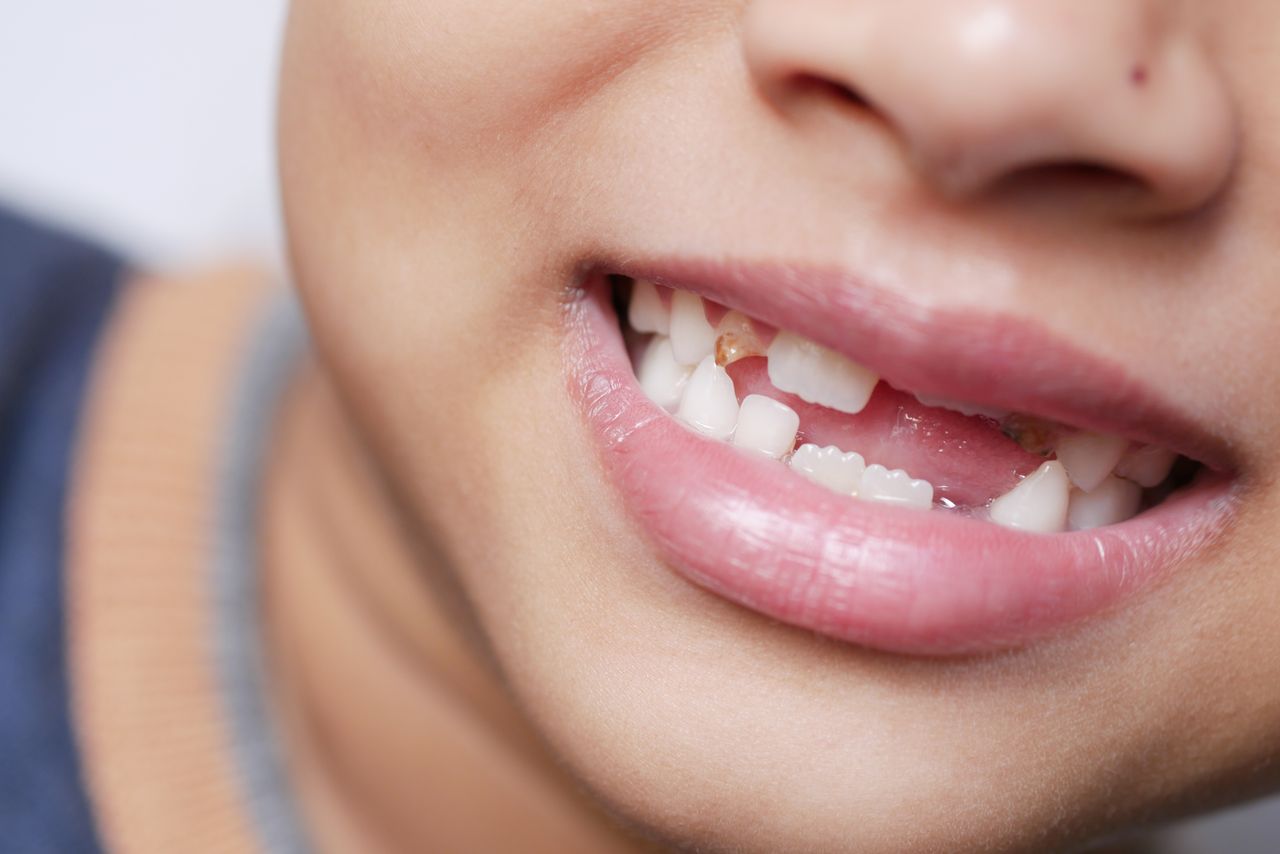
When a Baby Tooth Falls Out Early, the Space It Leaves Still Matters

A baby tooth lost well before its natural time may allow neighboring teeth to drift into the open space, leaving less room for the permanent tooth underneath. At JuniorDental, Dr. Julie Su fits space maintainers to hold that gap open, drawing on postgraduate certification in prosthodontics to match the appliance to each child's mouth.
Why Does an Early Baby Tooth Loss Need Attention?
A baby tooth holds open space for the permanent tooth developing beneath it, and losing it early removes that guide.
Baby molars in particular stay in place until close to age ten to twelve in many children, guiding the permanent teeth beneath them into position. Dr. Su explains that when one comes out years ahead of schedule, whether from decay or an accident, the teeth on either side have room to shift toward each other.
That shift narrows the space meant for the permanent tooth, which may then arrive crowded, tilted, or stuck beneath the gum. Dr. Su assesses how much time remains before the permanent tooth is due, since that timeline shapes whether a space maintainer makes sense.
What Does a Space Maintainer Do?
A space maintainer is a small fixed or removable appliance that holds the gap open until the permanent tooth is ready to come through.
Dr. Su's postgraduate training in prosthodontics centers on restoring and replacing missing tooth structure, which carries directly into choosing and fitting these devices. A fixed version, frequently a metal band and loop cemented to the neighboring tooth, works well for a single missing tooth and requires little cooperation from the child to stay effective.
A removable version resembles a small retainer and suits cases where several teeth are missing, though it depends on a child wearing it consistently. Dr. Su reviews the two options with parents and selects the design that fits the gap, the child's age, and how well they tolerate dental appliances.
How Long Does a Child Wear a Space Maintainer?
A space maintainer stays in place until the permanent tooth beneath it is close to emerging, then Dr. Su removes it.
The timeline varies by tooth and by child, so Dr. Su tracks the permanent tooth's progress with periodic checkups and, when needed, an X-ray. Some appliances stay in for under a year, while others remain for several years if the permanent tooth is not due until later childhood.
Parents are sometimes surprised the appliance needs regular monitoring rather than a single fit-and-forget visit. Dr. Su checks that the band or retainer still fits as the mouth grows and adjusts or replaces it if a child outgrows the original fit.
What Happens if a Missing Baby Tooth Goes Unaddressed?
Left alone, the gap allows neighboring teeth to lean into the space, which may turn a simple fix into orthodontic treatment later.
Dr. Su notes that a shifted tooth does not usually cause pain, so the problem tends to go unnoticed until the permanent tooth arrives with nowhere to fit. At that point, the fix that once needed a small appliance may instead need braces or expansion.
At JuniorDental, Dr. Julie Su treats a lost baby tooth as a timing question rather than a problem to watch and wait on, since the space itself starts changing from the day the tooth comes out.
Frequently Asked Questions
Does every child who loses a baby tooth early need a space maintainer?
No. Dr. Su weighs how much time is left before the permanent tooth is due, since a tooth arriving within a few months may not need one. Appliances are generally reserved for cases where months or years remain before the successor tooth is ready.
Does fitting a space maintainer hurt?
The fitting itself is not usually painful, since it does not involve the tooth's nerve. Children may feel some pressure as Dr. Su places the band, similar to trying on a ring that is a snug fit, and most adjust within a day.
Is it possible for a child to eat normally with a space maintainer?
Most children eat normally within a short time, though Dr. Su recommends avoiding sticky or hard foods that could loosen a fixed appliance. A removable version comes out for meals if she advises it, though most children keep it in throughout the day.
What happens if a space maintainer comes loose or falls out?
Dr. Su asks parents to call the clinic rather than wait for the next routine visit, since the space may start to close within weeks. If parents bring in the appliance intact, she decides whether to recement it or fit a new one.
Is a space maintainer the same as a retainer used after braces?
No. A retainer holds teeth in a finished position after orthodontic treatment, while a space maintainer holds an empty gap open before the permanent tooth has arrived. Dr. Su fits the two for entirely different stages of a child's dental development.