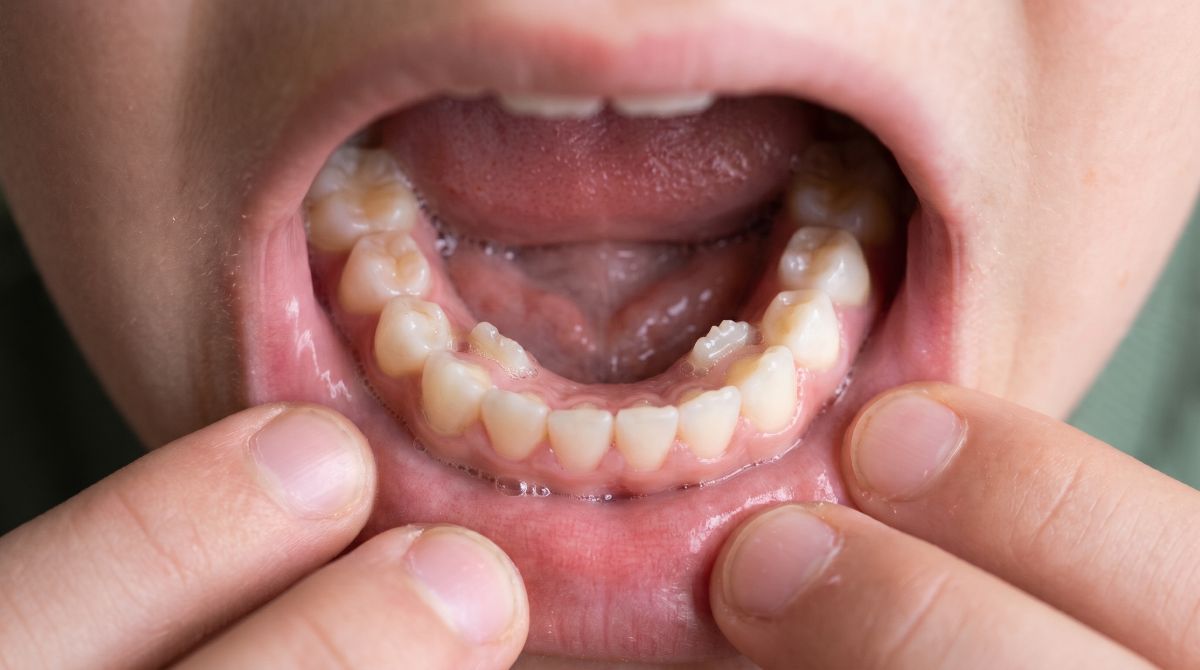
Nail-Biting and a Child's Teeth: What Parents Should Know

Quick answer: Nail biting is a common childhood habit, and it rarely calls for alarm. Over time, it may wear or chip the edges of the front teeth and, in some children, nudge their position. Many children outgrow it. At JuniorDental, we watch for small changes at routine exams and explain them calmly, with no blame and no rush.
You glance across the sofa and see your child's fingers at their mouth again. The nails look short and ragged. A grandparent mentioned it last week, and a quiet worry has followed you around since. Is the habit hurting the front teeth? Will it change their bite? Should you make them stop?
Take a breath. Research suggests roughly one in four children bites their nails, and the habit grows more common in the early teens. You have done nothing wrong by noticing it, and your child has done nothing wrong by having it.
Parents across Dubai ask us about nail biting and children's teeth, so we have set out what we know in plain language. Where the research is thin, we say so. If anything below sounds familiar, our team at JuniorDental is glad to look with you.
How does nail biting affect a growing mouth?
TL;DR: It may wear the edges of the front teeth and, in some children, shift their position slightly. The changes tend to be small, and a dentist spots them far sooner than a parent does.
Front teeth slice through food with ease. A fingernail is harder and thinner, and biting one asks the same few teeth to work at an awkward angle, again and again. Over months or years, the edges of the front teeth may wear down, chip, or look slightly uneven.
Few studies exist on the subject, so we speak carefully. A small 2024 study of children aged 9 to 12 compared the front tooth each child bit with against its neighbour. The biting tooth measured longer and tilted a little further forward. Some older orthodontic studies have also linked a long-standing habit with shorter roots on the front teeth.
Some clinicians wonder whether the jaw tires from holding an unusual position while biting. Evidence there is thin, so we treat it as something to watch rather than something to fear.
When does nail biting become a dental concern?
TL;DR: Occasional biting seldom matters for teeth. Daily biting over a long stretch, or biting alongside chips or flat edges, deserves a closer look.
A child who chews a nail during a long car ride is in a different place from a child who bites daily for years. How frequent the habit is, how long it has lasted and how hard the teeth work all shape the effect.
At a routine visit, we watch for tiny chips or flat spots along the edges of the front teeth, for a front tooth out of line with its neighbours, and for any shift in how the bite meets since the last visit. Any one of them has many possible causes, and none points to something you did. A growing mouth changes constantly, and a gentle comparison across several visits tells us more than a single glance.
What do we look for at a routine visit?
TL;DR: The six-month exam is the natural moment. We look at the whole child, mention any habit we notice, and keep the tone kind.
The American Academy of Pediatric Dentistry (AAPD) suggests checkups about every six months and lets each child's needs guide the timing. The same guidance encourages dentists to raise habits such as nail biting with school-age children and their families. A regular rhythm of visits lets us notice small changes early, long before they matter.
A paediatric dentist in Dubai treats the mouth as part of the whole child, and habits sit inside the bigger picture. At JuniorDental, a paediatric wellness exam checks for tooth decay, gum disease and other oral health concerns. Our full airway evaluation, which is part of every standard exam, looks at jaw width, tongue posture, palate shape and breathing patterns. We may also take close-up pictures with our intraoral camera, which helps us compare the front teeth from one visit to the next.
If we notice a chip, a worn edge or a change in position, we tell you what we see, explain what it means and talk through what, if anything, comes next.
How do I help my child without turning it into a battle?
TL;DR: Stay kind and patient. Calm support keeps the conversation open, and scolding rarely stops a habit the child does without thinking.
Many children bite without noticing. A habit on autopilot rarely responds to scolding or nagging, and a child who feels watched may bite more, not less. Warmth and patience keep the door open.
Many children let the habit go as school life, friendships and interests change. Some keep it longer, into the teen years or beyond. Neither path is unusual.
If your child wants to stop, tell us at the next visit, and we will talk through gentle, age-appropriate ways to help. Our focus is the teeth and the bite. If you want wider advice about the habit itself, your child's paediatrician is a good person to ask.
What if a bite change ever shows up?
TL;DR: We explain what we see and talk through the next step together. Early, or interceptive, orthodontic care is part of what JuniorDental offers.
If a bite change ever appears, nobody needs to rush. Habits like nail biting are only one of several influences on a growing bite, and a change is worth understanding before anyone decides what to do about it.
JuniorDental offers interceptive orthodontics, which guides a growing child's bite early rather than waiting for problems to settle in. Early interceptive treatment at age seven may reduce later orthodontic work and, in some cases, remove the need for it, though every child grows differently. Our approach puts prevention first, and we explain each option in plain language.
Frequently asked questions
Does nail biting affect a child's teeth?
It may, though the changes tend to be small. A child who bites hard nails may wear or chip the edges of the front teeth and, in some children, shift their position slightly. Few studies exist, so we look at each child individually and watch for change over time.
At what point does nail biting become a dental concern instead of an ordinary habit?
Daily biting over a long stretch, or biting alongside chips, flat edges or a tilted front tooth, deserves a closer look. Occasional biting seldom matters for teeth. A routine exam is the natural place to tell the two apart.
Will JuniorDental mention it if they notice it at a checkup?
Yes. If we notice wear, chips or a change in your child's bite, we tell you plainly and kindly, explain what it means and talk through the next step together. We keep the conversation free of blame.
Does the habit usually fade as children grow?
For many children, yes. Some let it go as school life and friendships change, while others keep it into their teens or beyond. Neither path is unusual, and neither says anything about your parenting.
Is there anything the clinic offers if the habit starts to affect the bite?
Yes. We start by watching and explaining. If a bite change needs more than watching, JuniorDental offers interceptive orthodontics, which guides a growing bite early, and we talk through each option with you.
Should I book an extra visit because of nail biting?
Usually not. The routine six-month exam is the natural time to mention it. If you notice a chipped tooth, a sore tooth or a sudden change in your child's bite, contact us sooner.
Nail biting is a small, common habit, and it deserves a calm response rather than worry. Mention it at your child's next visit, and our team at JuniorDental will look, explain and walk beside you at whatever pace feels comfortable.